Why The Long Face?

I caught sight of an angry-looking face the other day and was startled, nay horrified, to realise that it was me. I was sitting in a cafe enjoying a coffee and had glanced at my reflection in the window.

It seems I don’t have the kind of face that looks terribly happy when at rest – for some reason my features arrange themselves into this angry line (please don’t ask to look at the photo on my driver’s licence). This is a famous and fairly common phenomenon known as ‘Resting Bitch Face’ (but I note that it affects men and women equally, so there’s an unsurprising touch of misogyny in the phrase). “Give us a smile love!”, and all that. Sigh.

Where was I? Oh yes. I started to wonder if I was secretly very annoyed about something (see above), or generally not very nice. Maybe my face was just doing its best to communicate this fact to others? But it seems that it’s just the way things go – some people have features that ‘settle’ a certain way. I can blame my genes.

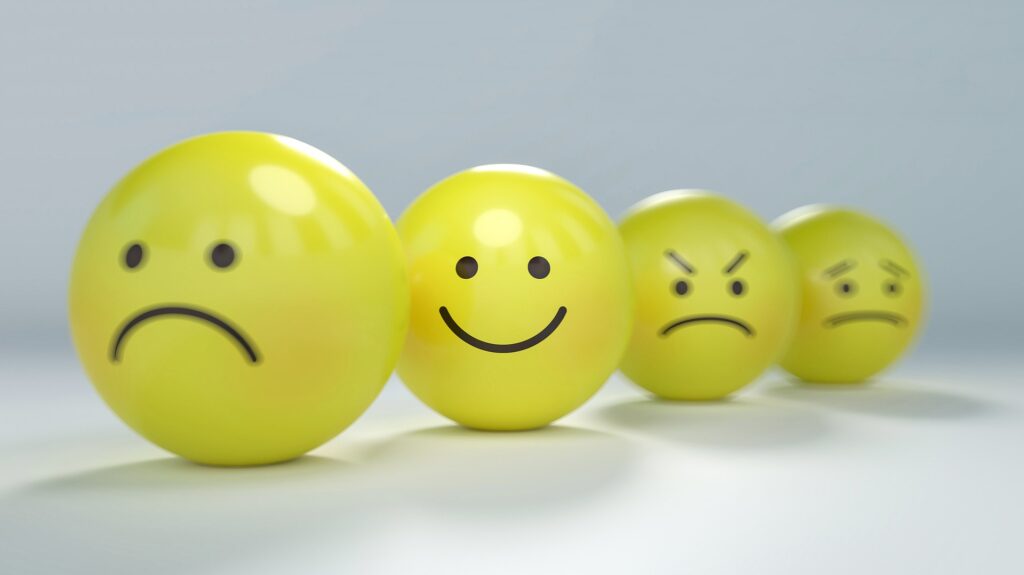
In the 1970s the psychologist Paul Ekman carried out experiments to identify the six emotions through facial expressions, even working out which muscles were used each time. Fascinatingly, he and his colleague started to notice that their mood was affected: on days when they had to form frowns they felt down, even after the return home and a good sleep. They discovered that signals arrive in the brain to identify a feeling when facial expressions take place. So emotions seem to work from the outside in, as well as the inside out. You can turn your frown upside down after all. And soon enough your brain will start to believe that all is well. 

Next time I take a coffee break I’ll make an effort to form a smile, even a small one. If nothing else, at least I won’t scare the people walking past the window this time.

Tell it in Colour

Remember black and white TV? Me neither. But imagine what it must have been like to see things in TECHNICOLOUR for the first time. Watching the snooker, in particular, was surely much improved.

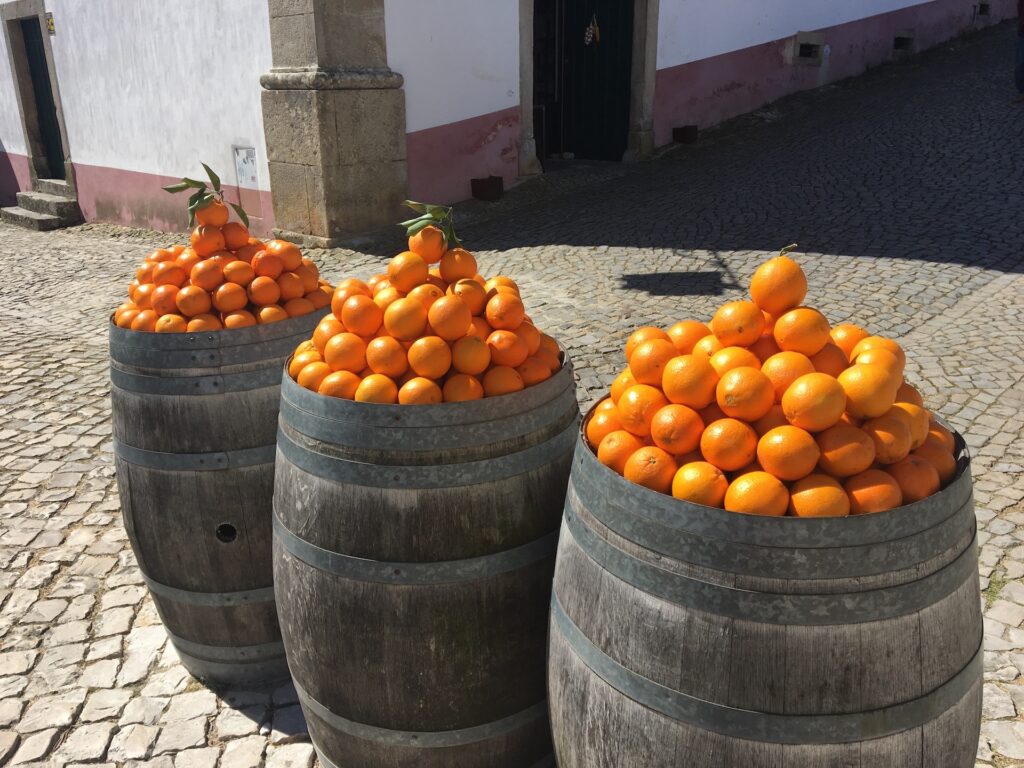
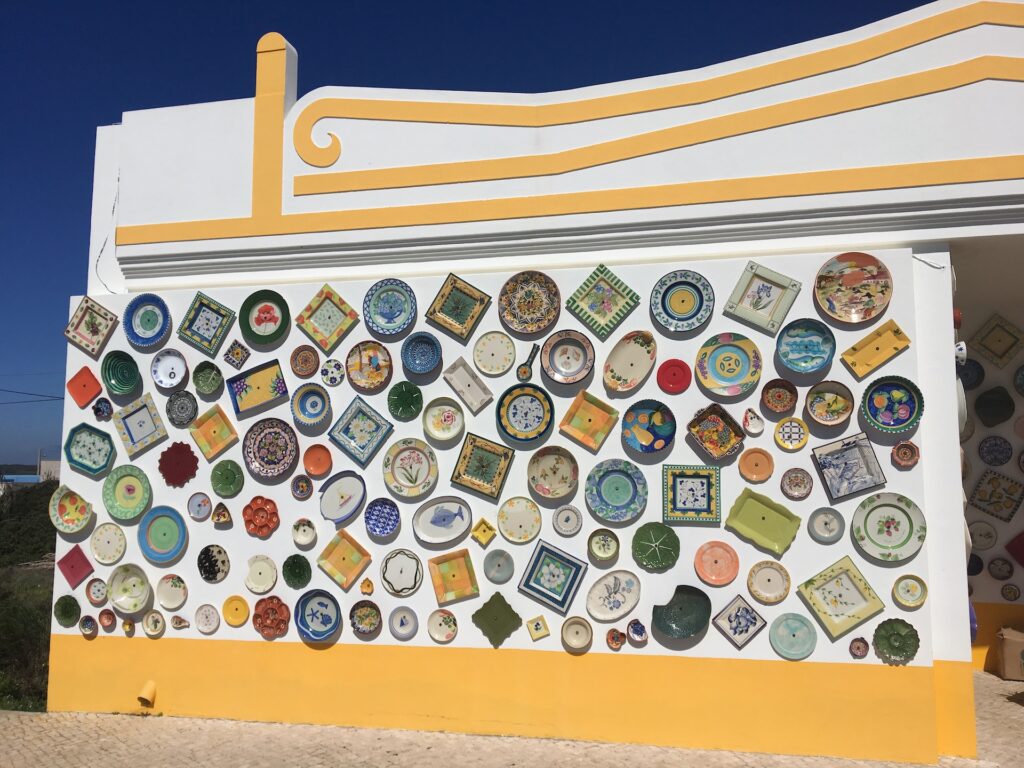
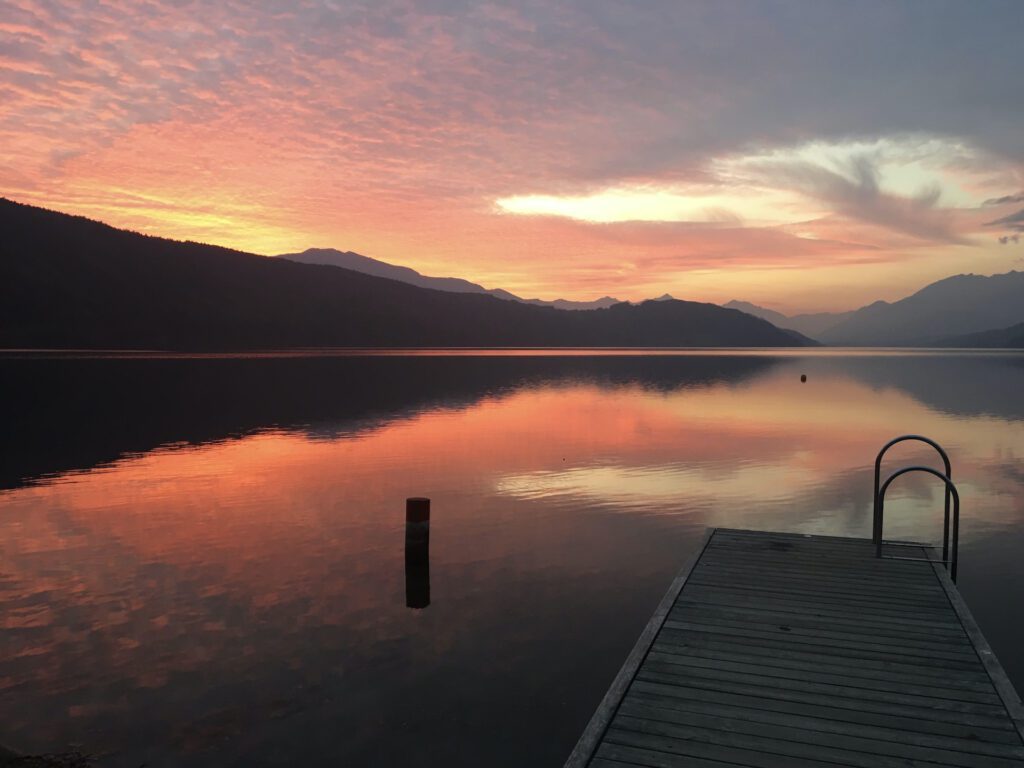
I’ve always thought that Belfast was a grey old place. Grey sky, grey buildings, even grey faces. Growing up in seventies Belfast was a dark time, of course, in more ways than one. Then on the Big Trip a few years ago I’d gasp in awe at all the European colour: ceramic tiles in doorways, oranges that seemed too bright to be real, sunsets that lit up the sky. I told myself that I was being shaken awake with colour that didn’t even exist back at home.

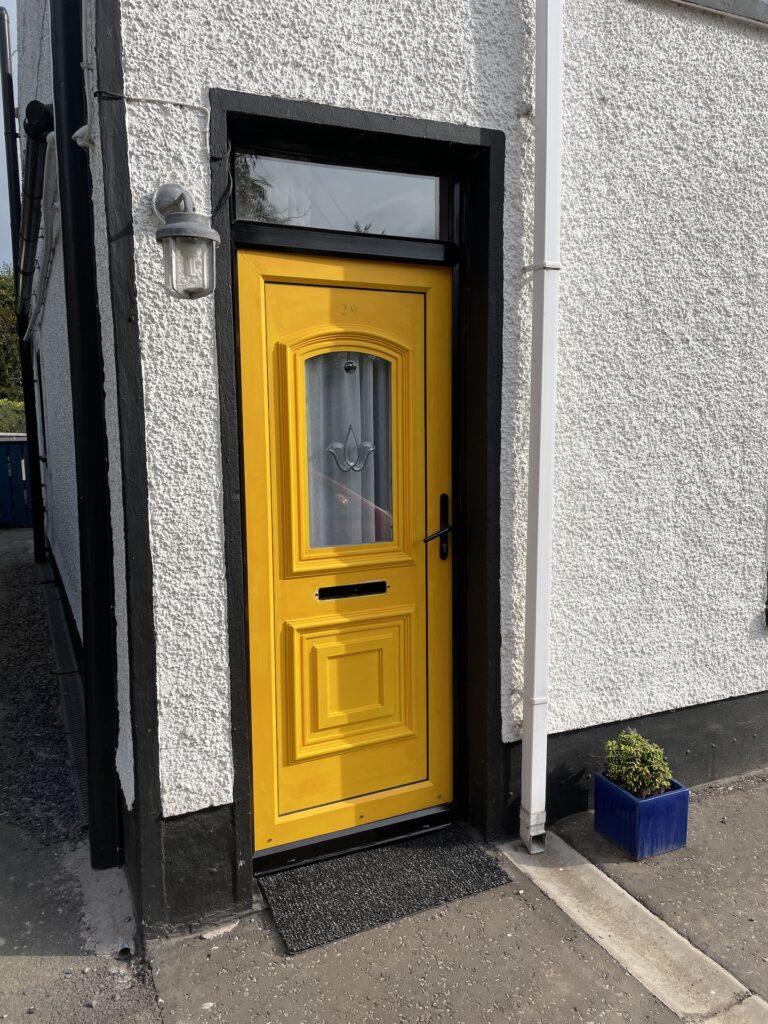
But isn’t this the emerald isle? Green fields aren’t so common, and they’re rather beautiful. There’s art here too. Colour is all around. I had a lovely chat with a new neighbour the other day who said how much she loves walking past our door with its bright yellow paint. She’d always wondered if an artist lived here. Isn’t that something? Splashing colour around the place brings joy. 

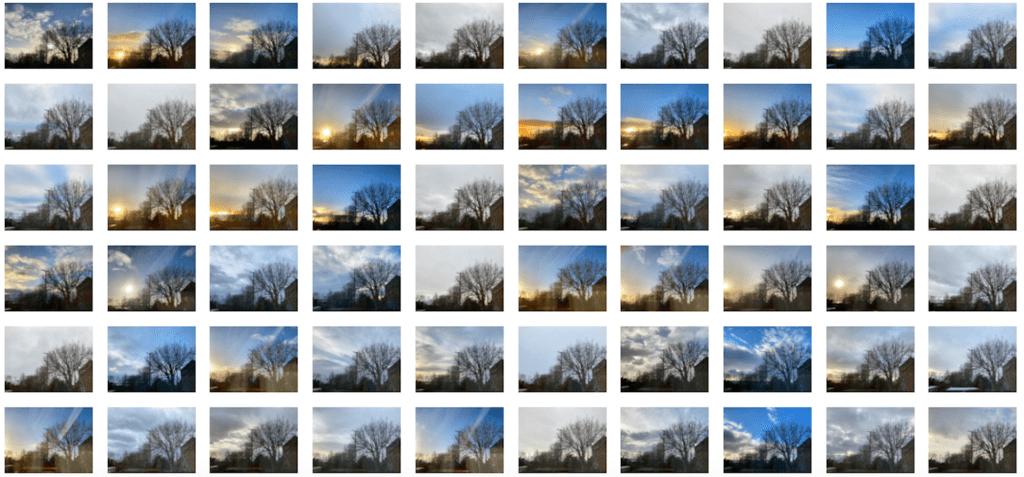
Turns out the sky here is something other than grey on occasion too. I’ve been taking a photo of the ash tree outside my bedroom window every morning since the start of the year and I’d expected it to prove my theory right. But the sky is quite often blue. Who’d have thought? I don’t think I looked properly before. Or maybe I had coloured it in using grey childhood memories to leave only smudges.

Good things, colourful things, are waiting to be found. Sometimes they hide, but seeking them out will bring joy. Spread the word: colour is here.

Little House on the Prairie

I spent the weekend in a glamping pod with best mates and their kids. Waking up to a big sky as trees wave through the window, avoiding rain showers by cuddling under blankets, barbecuing very (very) slowly, playing silly ‘would you rather’ games over fish and chips, sitting by the campfire with whiskey, staring at the stars. It was all rather blissful. Spending time with loved ones while out in the fresh air is surely one of life’s greatest pleasures.

And more than anything it was a reminder that I want to live more simply and take up less space in the world. Those clever little living pods were adorable and cosy. They had everything you could need. Most of all, they were small. Living in Hans the Van for a year and a half taught me so much about tiny living. We spent less during our travels than ‘normal’ life, we bought less (it wouldn’t fit in the cupboards) and we didn’t waste food because we bought fresh and local. I’d like to keep these lessons at the forefront of my mind these days. Now that I’m back to living in an actual house, I’ve noticed that I’m accumulating stuff yet again. It’s not a massive home but the cupboards and loft and shed are filling up. 

Modern life has pushed us towards debt: the big house, the big car, the big family holiday. Big, big, big. But what if we started to shrink things and see magic in the small? I’m keeping an eye out for a tiny cabin home (preferably in an equally tiny forest) and I’ll need to be able to fit all my worldly goods inside. So it’s time to clear out while remembering the mantra: the best things in life are free. 

Laughing with friends, stroking a cat, noticing new flowers starting to bloom, staring at the stars. Big things are small. Small things are big. Let’s start to get them the right way round.

Memories are Made of This

What’s your earliest memory? I think mine is an incident in the lift on our way up to Granny and Granda’s flat. I was about four years old and was holding out my hands filled with coins that I’d been saving in my piggybank. It might have added up to around £3.96 or so. Mum tried to give me a five pound note in exchange and I howled the place down. I was very put out that she was giving me ONE thing in exchange for LOADS of things. Hardly fair was it?

Now I wonder if that memory is strong because Mum tells the story all the time? Family legends follow us around and even slightly tall tales can become embedded in our life stories until we completely believe they happened. 

Memory is a complex mechanism and one that some psychologists have given their entire professional life to understand. The beginnings of discovery in 1953 of the hippocampus region in the brain came about (as these things tend to do) quite by accident. Surgeons had removed a section of H.M.’s brain in an attempt to help reduce epileptic fits. But when he woke up he was no longer able to form new memories. Each day was brand new and each loved one was a stranger. 

Image: https://www.denofgeek.com/movies/inside-out-review/

Our brains work very hard to encode, store and then retrieve memories. I keep picturing the amazing Pixar film Inside Out when I imagine what’s going on in my head – all those lovely memories being filed and moved and coloured in a particular way. And the message that sad memories simply join happy ones is profound. They both make us who we are. They also provide us with a reservoir to dip into when required.

At the dentist last week (root canal work, I don’t want to talk about it) I purposely closed my eyes and skipped through wonderful memories of The Big Trip. I did the same thing in the claustrophobic confines of an MRI scanner last year. And the escape from reality worked. So well, in fact, that I wondered if the radiologist would look at the images on the screen and see my brain’s memory and sensory regions light up.

Like many of us I sometimes feel afraid about losing my memory (MS is an uncertain disease) because I know who I am, I know who I love and I remember, most of all, the happiest and the saddest of days that have made me the person I am. The brain is holding it all for me. They’re beyond precious, those memories. And I’ll treasure them. 

The Zone of Comfort

But I like it here!

Do something every day that scares you. Every day? Really? Wouldn’t that be exhausting? I’ve been pushing against my comfort boundaries and have noticed that the harder I push, the bigger the reward. It’s different for all of us, no doubt. The trick is to keep nudging things along, dipping toes in water to see how it feels. 

My main problem tends to be my (loud) inner critic. She has a field day when I start to step towards the edge, always quick to leap up and hold me back, keen to keep me safe. To be fair, the comfort zone cushions are nice and squishy. Why would you leave the area and risk the discomfort of regret or failure? 

A while back, we planned to leave our jobs, sell our house, and pack everything into a van to live on the road for a year. The inner critic once again started shouting. It’s dangerous out there! What if something goes wrong miles from home? You don’t even speak the languages of those countries! (Also, I’ve heard there are wolves in Scandinavia). And so on. We felt the fear and did it anyway. And it was an unforgettable experience, leaving us with memories of a lifetime.

I had always wanted to record my voice and maybe even feature on the radio some day. But your voice sounds weird! And you don’t know the first thing about recording things! I felt the fear and did it anyway. And now I’m a regular contributor on BBC Radio Ulster sharing thoughts for the day. 

More recently, when I accepted a job as a storyteller visiting prisons to lead sessions with women and young people, the voice was filled with anxiety as it spoke about safety and failure. I felt the fear and did it anyway. And already I’ve learned so much about life’s twists and turns from some amazing people. 

All of these things involved stepping out of my comfort zone, just to see what would happen. It wasn’t always easy. Sometimes I second-guessed myself, sometimes I thought I’d make a mistake, but mostly I found that life rewarded my courage with newly-formed self-belief.

There’s nothing quite like the feeling that comes from pushing yourself (even a little) and living to tell the tale. I wonder what’s around the next corner…I’m up for giving it a go.