Remember

It’s said that memories fade. As we grow older our capacity to make new memories lessens and we start to focus instead on times long ago – Mrs Smith down the road who would swing her stick at kids who passed by, the odd young man at the bus stop who’d talk to himself, the teacher who’d smile when you got the answer right. 

Life’s timeline stretches in a strange way depending on where we stand within it. It shrinks and expands and even stops. That long night in hospital, the day you stood on top of a mountain and felt the wind in your hair, the moment you said a final farewell. Images flash by and the heart struggles to keep up. Did you remember that right? Was it raining or not? Memories can be unreliable too, that’s the thing. Our brains are clever. They protect us all day long from things that can hurt and I think that’s marvellous. 

But it’s important to pause on the timeline now and again and take stock. Particular dates are the perfect opportunity to do so. Tomorrow is the anniversary of my brother’s death. I’ve spoken about it before and yet every year, when the leaves change colour and the nights draw in, my body tells my mind to remember. I get lethargic, snappy and down. And soon enough I nod and realise what’s happening. Grief speaks to us and it’s worth listening. You can place it in a drawer for a while, if the time isn’t right, but soon enough it rattles around in there until you open up and take a look. It’s dark inside but the light gets in too. 
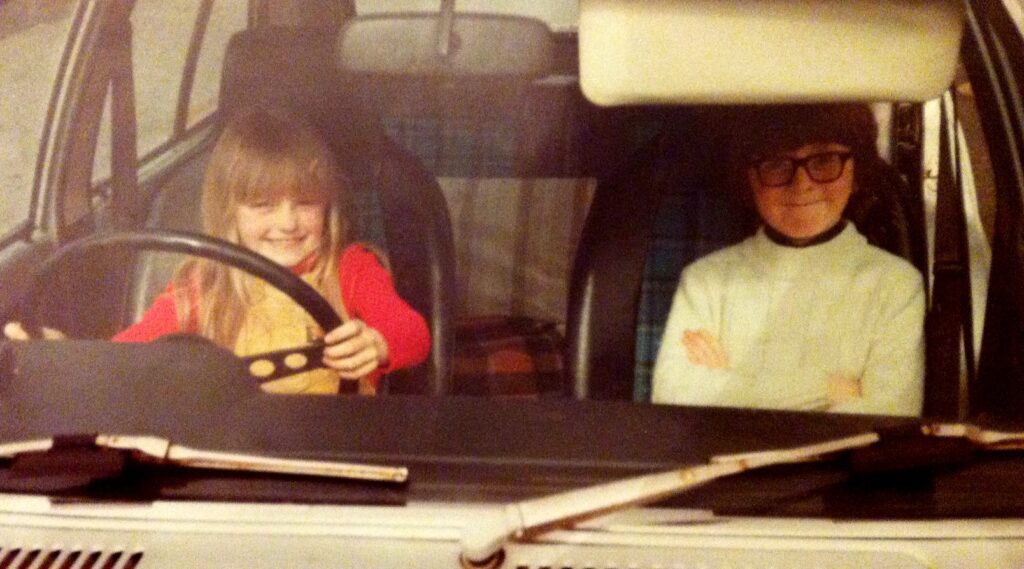
And I’m noticing that eight years on from that awful day the snapshots in the drawer are brighter – Stephen’s giggle, his adoring smile at his young daughter, his unbeatable sarcasm. He was kind and funny and gentle. He was here for a time and he was loved. 

For those of us left behind, remembering is hard. But in many ways it’s easy too. And soon enough it folds itself within what is left and becomes part of who we are. And we find we can breathe again. 

Happy Endings

Apparently there’s a phase in publishing right now for ‘up-lit’ with gentle tension and happy endings. No more sustained peril and yet another beautiful young woman lying dead somewhere. Movie makers are also getting in on the act and are looking for the next big Rom Com (remember those?). Given the state of the world right now it stands to reason that we’re looking for light in our imagined worlds. Art can speak and these days we simply want it to say “It’s all going to be okay in the end.” 

But I’ve come to realise that in books and movies I lean more towards darkness than light. A close friend pointed this out a while back and I laughed it off but it got me thinking. I’ve tried reading books that fall into the ‘cheer up’ category and I can’t finish them. I even struggle to write about happy things, choosing instead in a recent short story to bring a scary group of crows onto the scene who ended up chasing a pet dog. What’s going on? 

It’s no surprise that children’s fairy tales are so dark. The brothers Grimm certainly knew how to teach young minds about danger, fear, identity and all things in between. I may have spent too many childhood hours within the pages of my ladybird books to emerge as an adult with any inkling of lightheartedness. I found a cloud and sat happily under it.

For a piece of art to speak to us, we need to connect with it. It might result in confusion or boredom or even transcendence (if you’re lucky) but something happens. Maybe for each of us this connection looks different. Laughing at comedy? Crying at romance? Shivering at horror? All good. The trick is to find your zone and embrace it. Seek it out even, because the feelings of catharsis and closure that happen within fictional or artistic worlds are truly special. There’s really nothing like it when you close the last page of a good book or watch the credits roll after an engrossing TV show. We’ve disappeared for a while, lived vicariously with dragons or monsters or friends or foes, and lived to tell the tale. 

Life is not so clean. It’s messy: worries trundle on, uncertainty continues, bad people don’t get their comeuppance. So the tragi-comic land is one we need right now. There’s a beginning, a middle and an end. Light or dark, bring it on. Art is speaking and even if just for a while, we are listening.

Find Your Tribe

I made a new friend recently. And I’m middle-aged! For some reason it’s so much harder as a grown up to form new relationships like this. We’re too busy, mainly, but probably also a bit too lazy and stuck in our ways. And there’s the potential for humiliating rejections that feel so much worse than simply being left to last during the school sports team selection, or left leaning against the wall at a disco while everyone else pairs up (although let’s be honest, those things did hurt our tiny addled hearts).

This new buddy came along all thanks to our new yellow door. Regular readers may remember that last year we wanted to freshen up our old white (or not-so-white) PVC front door and took the plunge and painted it yellow. I say yellow but I mean, really, really yellow. “It’s different,” according to our neighbour, Elaine, from down the road. And since our little terraced house opens onto the pavement this means that many passersby get to admire it as they go about their day (it is, after all, impossible to ignore).

So one fine August day I happened to be sorting out the recycling (as you do) and someone said hello. Usually the conversation ends here (or doesn’t even start, we’re not all that friendly around here) but this time the smiling new neighbour, just moved in around the corner, said how much she loved the yellow door, that it always cheered her up and she had always wondered if someone creative lived here. There followed a great blather about art, writing and the amusing nuances of our local community. It was great. There was a moment when things clicked – aren’t those moments precious? And I’m happy to say that we’ve since met up for coffee, talked and talked (and discovered even more similarities). Nina has even become one of our trusted cat-sitters. And all because of a yellow door. 

But it’s also because of Nina’s courage to suggest we meet and find out more about each other. It so easily could have become just a one-off fun interaction. But when you find a member of your tribe – you know the ones, they make you laugh, they share your world views, they like what you like – you want to be around them. There’s that ‘click’ again. 

So if you connect with someone, be brave and arrange to see them and foster that relationship. It may not work out (hence the bravery) but it’s so worth stepping forward and asking ‘do you fancy a coffee some time?’ In other words, ‘will you be my friend?’ Life can be lonely and isolating, but there are others out there who can be your fellow travellers through life. You might even find you’re peas in a pod. And who wouldn’t want to be that?

Me and my mates

Fetch the Ladder

Penny the cat has been going through a phase of getting stuck on the roof. She clambers up a tree, jumps on top of the car port and then spends the next few hours (or an entire day on one memorable occasion) crying out for help.

Every time I look out the window and see her, I can’t believe she’s done it again. The last rescue attempt was fraught for all involved, even our neighbours were anxious – four-year-old Toby stood underneath with eyes closed and arms open. And people asked later if ‘the wee cat was okay’. She was fine (my arms, on the other hand, were bruised and bleeding). 

So why does the little cat keep going up there? Has she forgotten how awful it is? Does she not realise what she’s doing until it’s too late? Or does she simply love danger? There’s no way to find out. I’ve tried to instil some wisdom (while holding onto her as we wobble down the ladder) but she refuses to listen. Cats. 

And when Penny realises she can’t get down on her own, she admits that she needs help. So she cries (it’s heartbreaking, ask little Toby). Being a cat, though, she recoils in horror when I reach out to help.

To be honest I recognise the same behaviour patterns in myself. I repeat mistakes all the time: taking on too much work, bowing to anxious thoughts, avoiding exercise. And even though the outcomes aren’t good, it’s as if my brain overrides this knowledge until it’s too late. I even struggle to accept help. Like Penny I’ll cry out from the rooftop when I finally realise I’m stuck, but would still rather sort out my own problems. I don’t know why I’m like this but it’s probably a mixture of pride and a need to remain in control. 

So I’m learning to check my behavioural choices now and then, and to accept help when I need it. The rescue ladder is off to the side, but it’s there. Life lessons, as ever, from a furry friend. 

The Art of Procrastination

For decades now, I’ve been sitting on an idea for a novel and the other day I read a review of a new book that is exactly what I should have written. In fact, for a mad moment I thought I’d actually done it and was reading a review all about me. It’s exactly my idea, down to the letter. And worse (sorry to admit it) it looks fantastic. I think I would’ve preferred it to be a terrible read, so that I could be pushed into completing my own version of the thing. 

I started pondering a novel based on Thomas Hardy when I was at college. I gathered lots of secondhand books on his life – biographies, poetry collections, even rare editions written by his wife, Emma, and others who met him. I worked in various full-time jobs after college and tried to write on days off, but it was difficult. Nonetheless, I produced a first draft (it’s not good) and it’s still sitting on my shelf, frequently shaking its head in disappointment that I never got round to fixing it. 

I suppose I always thought there’d be time in the future. I’d glance at my ‘Hardy shelf’ of books and know that some day I would produce my masterpiece. And now it’s too late. Someone else, someone with more time (and more talent) has done it.

‘The Trouble is, you think you’ve time.’

But is it really too late? I’ll read the book, no doubt, knowing all the references to Hardy’s life and works, recognising poetic parallels, trying hard to swallow envy when it appears. But surely there’s room for us all? And I still want to tell the story of Emma and Florence Hardy – the two women who happened to marry a famous writer but who were overshadowed in their time. They deserve a voice. 

Maybe soon I’ll dust off the manuscript and grapple with an edit. This impressive review of another book might be just the push I needed. If you’ve got your own version of ‘some day’, maybe it’s closer than you think. Time waits for no-one.