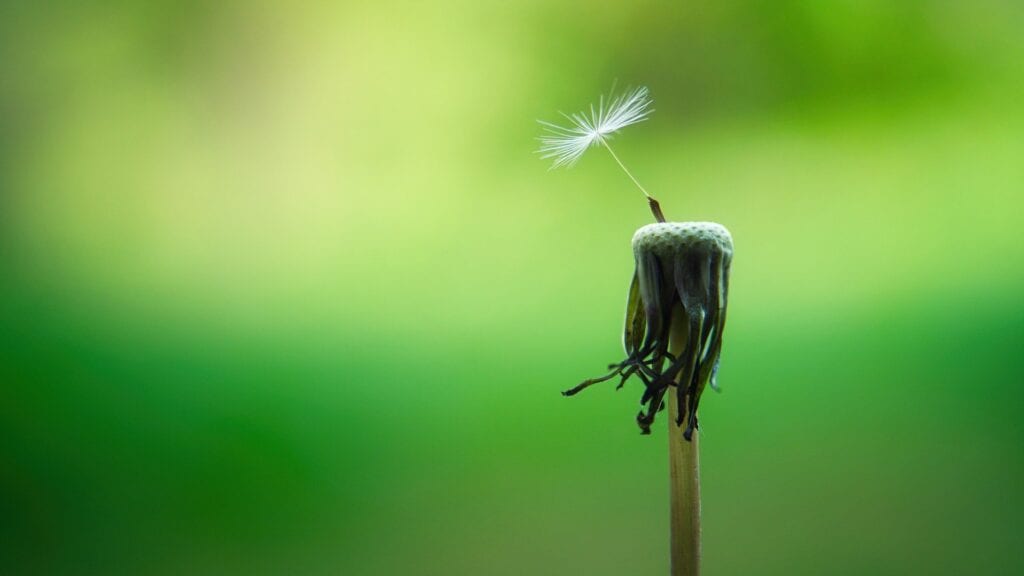
What is it about poetry? I’ve found myself holding onto it for dear life lately, picking up volume after volume in order to escape the fearful – and unordinary – days all around us.
Alongside a daily visit to The Emergency Poet, edited by Deborah Alma, I’m spending most mornings with Brian Bilston who has become Twitter’s unofficial poet laureate. Amanda Gorman’s spellbinding recital of ‘The Hill We Climb’ at Biden’s inauguration continues to speak of both admonishment and hope, while Margaret Atwood has a new volume out (‘Dearly: Poems’ – on my wish list). Breakfast, lunch, dinner and supper – words are food.
And so to the Twittersphere’s laureate, Brian Bilston and his Serenity Prayer. Read or listen and if a smile doesn’t creep across your face I’ll eat my hat.
I’m not a hugger. Generally I exist in a fairly wide expanse of ‘personal space’ and feel quite content. But this last year of years has brought some surprises – turns out, I miss hugs. Who’d have thought?
Of the five senses, touch is perhaps one of the most forgotten. As soon as we’re born we know that it’s required for our survival (newborns flourish with skin-to-skin contact) and it’s one of the last senses to leave during our last moments. Put simply, touch keeps us alive.
Neuroscience agrees: social touch releases oxytocin and lowers heart rate, reminding our bodies that we are here, reminding our minds that we are not alone.
When I got back from a year of travelling I was catching up with people in a noisy bar (remember that?) and hugged a close friend, one of those hugs that lasts longer than normal and transforms into an embrace. And among the noise and laughter we realised we had started to cry. Something happened in that moment that brought emotion to the surface, and allowed it to break – no words were needed. Cara had gone through a tough time and I had missed her. Simple really.
We make things complicated when they’re not. Reaching out is how we’re made – the unforced trust that children place in those around them when they run towards us with open arms. It’s devastating that the pandemic is taking something so important away: instead of reaching out, we recoil; instead of brushing an eyelash off someone’s cheek, we leave it there.
Lockdown for those who live alone is hard to bear and it’s no surprise that pets have been keeping us going on these dark days and nights. Dogs and cats all over the country have been cuddled like never before.
I wish I could end by saying it’ll all be okay soon, that we’ll be back to close contact and crowded rooms any day now. Maybe the best thing for now is that we are learning lessons, and as ever they are hard-won.
A hand to hold, a stroke of hair, a rest of head on shoulder, all combine to keep us alive and well. I for one can’t wait to wrap my arms around loved ones once more. I took too much for granted. Hugs are brilliant.
It’s dark out there. And it comes as no surprise that the second week of January contains what’s known as ‘blue Monday’ as we struggle to set aside the lights of Christmas and as resolutions start to fail. Add to that the continuing challenges of a global pandemic and it stands to reason that demotivation and despondency are in charge right now.
Light at the end of the tunnel is something we all seek, now more than ever. This particular tunnel has been long and dark and scary. And all too often those small glimmers of light dwindle before we can reach them. So we trudge onwards, heads bowed, feet dragging.
My granny used to shrug her (tiny but formidable) shoulders if I was to complain about something, saying “Haven’t you got two legs?” This wasn’t helpful at the time but I can see her point. Wellness advice suggests we show gratitude, but this can induce guilt – I should be grateful for what I’ve got – and the resulting comparative empathy is not good. Gratitude and mindfulness can be useful but if guilt grows around them it turns out to be counterproductive. It’s okay to say how you feel and find someone who will validate those feelings. Asking for help is courageous.
And right now, as winter bites and January shocks us awake, it’s more and more difficult to look ahead with hope. But I wonder if hibernation is a possible answer. I’m a winter person. I love the rain, sitting by the fire, reading a book while wrapped up in a blanket. Most of all I love the excuse to hide and lie low. “I’m wintering just now,” is a frequent refrain as I take lessons from nature and stop rushing around. In fact, hibernation itself is a wonder – hedgehogs are smart little beasts. This state of inactivity slows heart rates and breathing, lowers body temperatures and metabolism. If only humans could do the same during the winter months allowing us to emerge with the spring flowers ready to dance once again.
But life is not that kind and humans have created rules and responsibilities that simply won’t allow us to stop, no matter the season. Even hibernating hedgehogs have to get up now and again to look for food or respond to danger, so we can learn from them and hide just a little bit, without guilt. We can find comfort in warm blankets and warm drinks, seek togetherness with loved ones, search for good news stories among the murk of bad news, jump in puddles and never mind the wet socks.
Our darkness right now is both seasonal and personal. We are all weary. And it’s okay to admit it. Find your inner hedgehog and curl up somewhere warm and safe. And one day the sun will shine, the flowers will bloom and life will welcome you home.
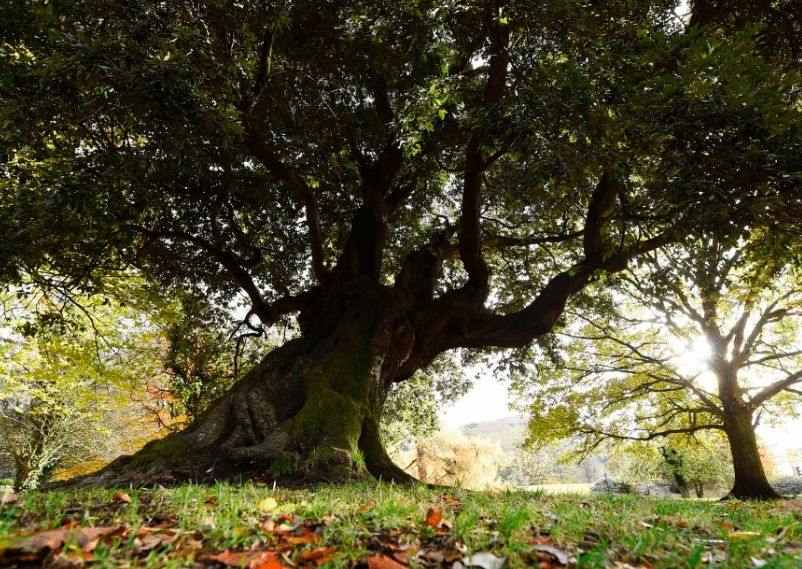
I love trees. Standing in a forest and looking up, resting my hand on a nearby trunk can ground me so much that I often wonder if nature is speaking.
Old Homer, Rostrevor. Picture credit: www.treeoftheyear.com
There’s a tree in Rostrevor called Old Homer that leans alarmingly to the side and has done for almost two hundred years. Did Finn McCool lean on it? The oak is beloved of locals and as I write is being propped up by ladders and scaffolding while people in high vis vests tilt their heads in worry. Finally, Old Homer might be about to break.
Resilience has long been associated with roots and trees and all things seasonal. We bend rather than break. We adapt to change. We cope with trauma. If our roots are strong we will carry on. But sometimes the uncertainty and challenge of the external environment can push us to our limits as we face the final straw that tilts the old oak tree one degree too far.
A new year has happened after a long and difficult old one. But it feels as if nothing has really changed with more lockdown rules and closures and still the inability to meet in person. I saw that picture of Old Homer this morning and immediately felt an affinity: tired and ready to fall over.
And yet, I also saw glimmers of light in the sky. I saw that those old branches are leaning into the wind and coming to rest on those who can catch them when they fall. Community is everything, especially when things are tough. Psychologists have identified its key role in finding resilience. We are not alone.
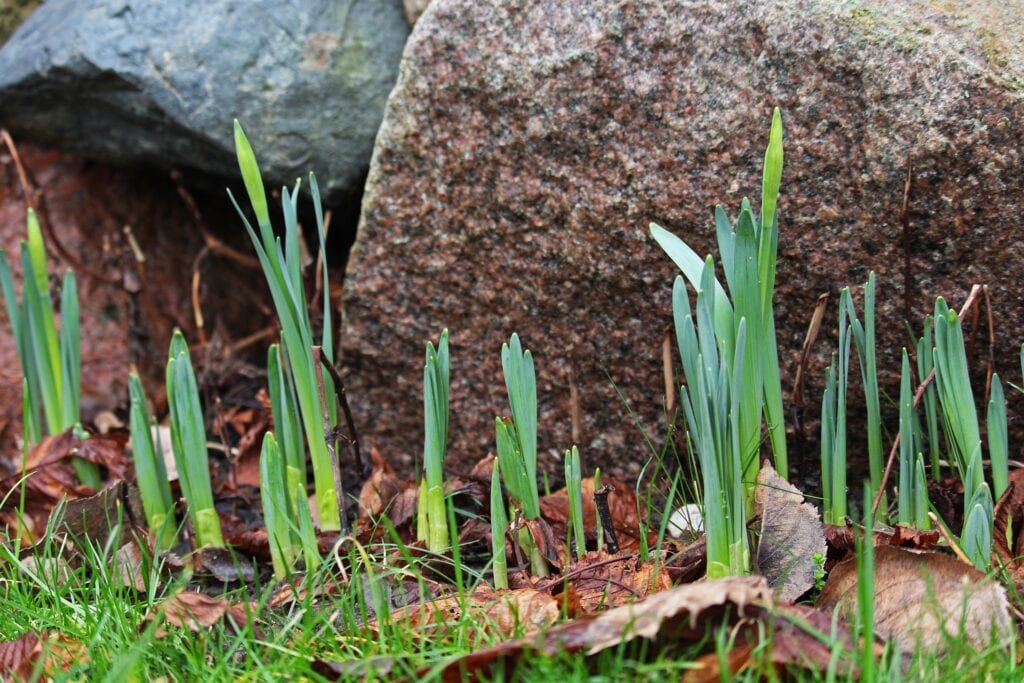
Now is our time to lean and wait, find the courage in our deep roots to hold tight to each other until the storm passes. Nature will teach us lessons as the year progresses – already I’ve noticed daffodil shoots popping up among the weeds. As Hemingway said ‘the sun also rises.’
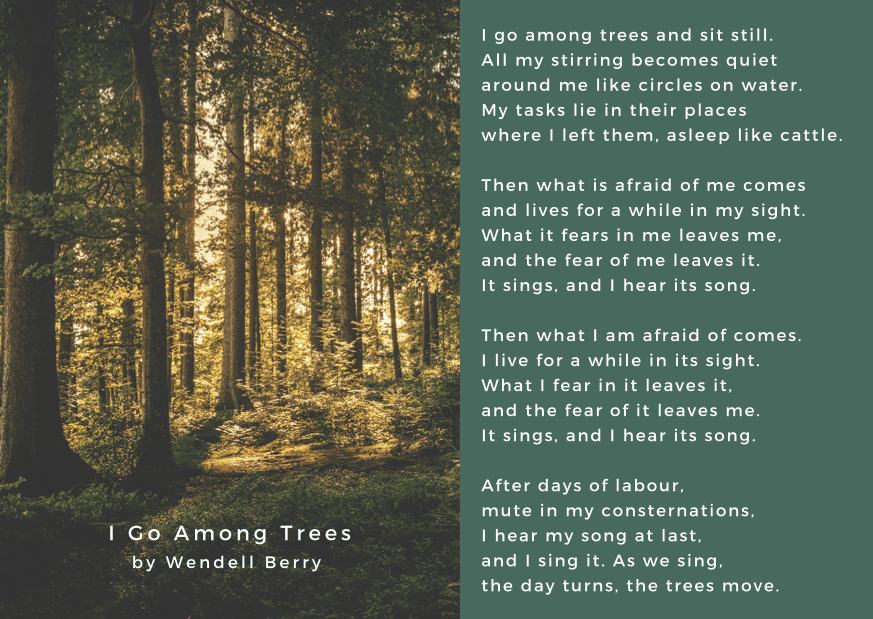
I’ll leave you with this little piece of heaven from Wendell Berry:
And so the day will turn, the trees will move, and there we will be.
Like Jay Gatsby, we humans have an extraordinary gift for hope. Despite dark days we have this incredible ability to seek solutions to problems, all the while believing that the light will come to shine once more.
It’s not always easy, and there are some who can access this precious gift more readily than others, but it is always available if we remind ourselves to seek it out. This involves a journey of discovery, of course, as we stumble along life’s often difficult roads, but it shines up ahead if we lift our eyes to find it.
Hope isn’t quite the same thing as optimism – rather than blindly assuming that all will be well, it offers us agency and sees a future that we can play our part in shaping. Clinging to hope during adversity is often the only option open to us.
Mady Gerrard was 14 when she was taken from her home in Hungary to Auschwitz concentration camp. Despite the horrors she witnessed there she was somehow able to hold onto hope. She made knitting needles from twigs, made necklaces from scraps of metal and today, having recently celebrated her 90th birthday, Mady continues to shine with that hope that pulled her through the darkest of times. “Don’t give up hope,” she says, while knitting mask protectors for NHS staff, cross that she can’t hug loved ones but hopeful for a brighter tomorrow.
As others have said in similar circumstances, hope is the last thing to die. Life is tough, scary, uncertain. It is often a challenge to navigate and to find our place. But when we hold out for hope we find better physical and mental health, and we find ourselves able to reach out to others too. Mady made necklaces in the dark. We can do the same in the knowledge that brighter days are surely ahead.
“Hope is the thing with feathers that perches in the soul – and sings the tunes without the words – and never stops at all.”
Emily Dickinson
Christmas is almost upon us, a time of immeasurable hope. And at the end of the darkest of years for so many, with yet more restrictions in place and more uncertainty ahead, I plan to picture this feathery bird coming to rest on my shoulders and singing no matter what.
Hope is about the future. It is wide open and full of endless possibilities. Listen for its song, feel its wings. Hold onto it and soon it will fly free once again.