Midsummer Dreams

Is it just me? Books tend to frequent my dreams as well as real life.

Lately I’ve become a bit obsessed with non-fiction. History, psychology, anthropology – you name it. These tend to be massive books too (although on e-readers it’s hard to tell until you’ve spent literally months reading it and the chapter mark still chirpily says 33%). 

But if you get the book edition, its heft makes you feel both studious and knowledgeable (placing your glasses slightly down your nose helps, as does twiddling a pencil). It also looks amazing on the shelf. Let’s be honest it’s the aim to impress that finds such editions gracing our shelves.

“This? Oh yes, the latest Yuval Noah Harari. I find his views rather postmodern to be honest.”

“Where are your thrillers and romance novels?”, asks a friend, scanning the room.

“Get out.”

And so on. Funny how many fantastic non-fiction books I’ve read and now I can’t remember a thing. Stories stay a bit longer I suppose. 

One book that still comes to mind though is Matthew Walker’s ‘Why We Sleep.’ It’s always been a source of intrigue for me, this odd species requirement to remain unconscious for hours every day. And this book is both fascinating and frightening. 

And then the fish said I was now the queen and. . .

Matthew Walker is professor of psychology in the university of California and conducts frequent sleep experiments. In the book he explains that REM sleep, and the dreams it brings, quite simply keeps us alive. Without good sleep, he argues, we get sick, grow old too quickly and cannot function. I heartily recommend his chapter on dreams – why they happen, what they’re for and those incredible neurological activities as neurons fire and get up to all sorts of things while we’re unconscious. 

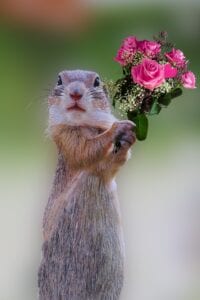
And if a grizzly bear runs alongside your car and tries to open the door before politely asking if he can get in? Well, maybe Freud can help me with that one. 

Get an early night, reduce the glare from your screens, avoid caffeine later in the day – it’s not rocket science, it’s sleep science. And I’m learning.

The Food of Love

In honour of World Music Day this week I’ve been reminiscing about musical moments that still resonate today. What an amazing thing for our species to create – come to think of it, who was the first human to pluck a string or sing a note? 

I studied music at school and at various concerts we pupils would obediently take to the stage and plonk or honk our way through set pieces before sitting down again, affecting boredom but really quite nervous. Then Julie would stand up with her violin and play the méditation from Thäis by Massenet, leaving us less talented pupils smiling through gritted teeth and the parents and teachers open-mouthed in astonishment.

I ignored the emotion at the time (too cool for school you understand) but I’ve never forgotten how those notes made me feel. Years later in Lübeck town square in Northern Germany, a violinist was playing Julie’s piece as I strolled by. All was well until that final harmonic note and I started to cry. It was so sudden and surprising that I laughed too. Music had taken a direct hit and control, for once, didn’t win. 

Music does this. Art does this. Somehow it speaks to sections of our hearts and minds that otherwise remain closed. Creating playlists for different life events simply brings colour – the pop mix for driving along on a sunny day; the chill out mix for reading by the fire; the dramatic soundtracks for a walk in the mountains. Music triggers dopamine, dilates the pupils, increases blood flow – it’s like being in love. And that moment when the chord finally resolves (Beethoven is the best at this) is just so pleasing

I’ll never forget driving through Norwegian tunnels for miles and miles while Hans Zimmer’s movie soundtracks added spooky accompaniment to the darkness. Or listening to a worship song while watching the waves crash. Or moving my shoulders because the rhythm of the pop song just won’t let me sit still.

Music speaks. How marvellous that we can listen and respond. Pop your headphones on, even for the length of one song, and turn up the volume and close your eyes. Your soul will be grateful.

The Humble Brag

One doesn’t like to blow one’s own trumpet but…I was shortlisted in a writing competition recently. My poem ‘Metamorphosis’ was chosen as one of the final three pieces. I shared the news on Twitter and then felt a bit embarrassed and full of myself. Why?

The art of the humblebrag is a relatively new one but it’s growing in popularity. Social media is the perfect home because we can hide behind our screens, tell half-truths, use image filters and generally make things out to be better than they are. This online arena has forced the humble bragger to wrestle with the attempt to share good news but without tone of voice or body language, so it’s a particular skill. I’m not sure we’re getting it right.

Some good recent examples:
 
The fake complaint: So stressed: my company has outgrown my tiny office and I don’t know where to put all the orders coming in!
 
The fake humility: Is this really me standing on the podium with an award for best newcomer? #blessed

No doubt about it, these statements rankle and tend to produce an eye-rolling smirk. But why shouldn’t we be happy for others when things go well for them? It’s probably because it’s such an odd juxtaposition – bragging and humility don’t sit well together. Which is it: proud or bashful? Perhaps a simple statement rather than a confusing cloak of false modesty would produce the response sought after (the ‘like’ button or the ‘congrats’ emoticon or a comment of approval). In the end we all just want to be liked.

It’s no doubt rooted in shame, too. We are the only primates to blush, we learn from a young age that boasting is bad and pride is a sin, and women and minorities, in particular, don’t feel as if they have permission to ‘big themselves up’ in public.

So today without fear and with a due sense of pride I’ll show off my poem (it was shortlisted you know). And please share your good news with me, I promise I won’t roll my eyes.

Friends Forever

Friendship bracelets. Nothing like them.

I re-connected with an old friend recently. Stephanie and I were inseparable at college, sharing essay deadlines, ‘early’ lectures (at 10am, I know) and the particular skill involved in making a student grant stretch each term. We ate a lot of sausages and noodles, and wore all our clothes at once rather than put the heat on. We even shared a tiny room in a truly terrible rented flat (the kitchen ankle-deep in water most days, the decor a mix of sixties floral and seventies beige). Happy days. And now twenty five years have passed and here we are sitting in the garden.

As an adult it’s hard to make friends, yet close friendships are consistently linked to better physical and mental health. Asking the question “will you be my friend?” is fraught with potential humiliation and rejection, so we wait and see, hoping that closeness will happen of its own accord. Maybe we need to be a bit braver and take steps to move from acquaintance to friend.

Female friendships are especially strong. There’s nothing like the close bond that forms when we share secrets, giggle at the same jokes and run to each other at the drop of a hat when life hurts. Katy allowed me to lean on her (literally at one point) during my brother’s funeral. Sally frequently delivers little thoughtful gifts. Cara makes me laugh with her potty-mouthed stories. Julie writes me letters. 

And as the blessings are many so, too, is the pain when a friendship ends. There’s really nothing like the loss of a deep connection. Love affairs end in heartbreak and we find sympathy in the telling; friendships end and we have nowhere to go with the grief. Self-criticism and a sharp loss fill our minds as we wonder what happened. And then technology allows for ‘ghosting’ until it slowly dawns that it’s over.

I still miss my best friend. We were opposites but the connection was instant. She moved back to England after fifteen years and following a silly argument about birthdays we simply lost touch. I sent messages and cards and then had to accept that she was no longer in my life. 

Friends are friends forever. It’s just that sometimes they shift and change as life moves on. I’ve reconnected with an old friend, found some new ones and so it goes.

Where would we be without them? Friends are silver and gold. Treasure them.

Sorry!

What do you do when someone walks into you? If you’re anything like me you apologise profusely, full of guilt that you had the temerity to get in someone’s way. Why am I like this? Don’t I deserve to take up space too?

Saying sorry is not unusual in these scenarios but sometimes the perpetrator hasn’t a clue and carries on with their day, blissfully oblivious. I was at a market festival in The Netherlands a while back and watched as a man knocked over a huge ceramic vase and then looked down at the broken pieces as if they’d been caused by someone else. He shrugged a little and walked off. Such nonchalance! I watched him go and shook my head in admiration. The stall holder shrugged too, and went off to find a broom.

We don’t really say sorry anymore, not properly at any rate. Maybe it’s the fear of litigation. ‘Don’t apologise, it admits guilt,’ say the insurance adverts. But surely admitting guilt is a good thing. It shows wisdom, an ability to see how your behaviour has affected someone else. 

All too often an apology is shallow and even points the finger elsewhere; my Dutch friend might have said that the vase shouldn’t have been left so close to the edge. Not his fault it got broken. 

But a heartfelt apology can lead to amazing things and as sympathy grows, so too does the potential for forgiveness and reconciliation. Imagine if he’d shown remorse and even helped to sweep up.

Sorry seems to be the hardest word. I hope I’ll soon be able to apologise when I have hurt someone and not just as a reflex when someone stands on my toes.