Only the Lonely

We all need to feel that we matter and belong. Connection is everything.  Humans rely on it for happiness, wellbeing and even survival.

To feel isolated and alone is devastating. Loneliness is on the increase and we need to talk about it. It’s all around but tends to be invisible, hidden behind walls of care homes or city apartments or student rooms. It’s hidden, too, behind shame and denial as we struggle to say the words: “sometimes I feel lonely”.

Adolescents and elderly people are most at risk: technological advances, a global pandemic and societal changes all add up to a dangerous moment in our human story.

People who are lonely are at higher risk of depression, heart disease, Type 2 diabetes. Add to that an increase in the production of stress hormones, lack of sleep, weakened immune systems and it is no exaggeration to say that loneliness is a matter of life and death. We are social creatures and we suffer when isolated from others.

In 1958 an American psychologist, Harry Harlow, carried out an experiment with infant rhesus monkeys to look at the effects of isolation. He set up two maternal shapes made from wire – one that held food and one that was covered in soft material – and then released the youngsters. Amazingly they all chose to run towards a soft figure for comfort rather than a wire figure that offered food.

We need each other. In a modern world that involves contactless shopping, private housing where neighbours don’t speak, interactions behind screens that avoid eye contact and tone of voice, we are more and more isolated. And for now we can no longer hug loved ones, visit one another, be part of a big crowd. Masks hide our faces, work is precarious or carried out from a distance, and fear is all around.

But all is not lost. Little steps are surely possible, for our own health as well as that of our family, friends and neighbours. Check in on each other. Reach out more. Phone calls, messages, even visits to doorways or waving through windows can all brighten someone’s day.

And as we connect we will find that we’re not alone after all.

Listen to audio version here

On Regret

Edith Piaf might have been wrong. I’m not sure it’s possible to live a life without regret but in many ways it might just turn out be a useful emotion in the end.

This one bites. Regret is a slow-burn of paths not taken and wrong choices made. We all regret things we’ve done but the majority of us tend to most regret actions not taken – those things we didn’t do when we had the chance.

It seems that time is in charge here as we try to use hindsight to fix mistakes, looking ever backwards, while the clock ticks on the time we have left. If something is fixable we can find a lesson to learn and maybe even a silver lining. We can say ‘at least I tried’ if we take the wrong job. And during a global pandemic I’m sure I’m not alone in wishing I had hugged people more, or appreciated the little things like busy coffee shops or packed concert halls. I aim to be better at this in the future. But there are things that time won’t allow to be changed; such as choosing whether or not to have children, or training to become a sports star. And it is then that regret becomes toxic, because it’s too late.

We all tend to focus on the path not taken – the one strewn with flowers and sunshine and happiness – and then we become trapped and unable to move forward with hope. We see that path in those shining colours even though it is impossible to tell. There are no second chances, this is our one and only life.

A moving book called ‘The Top 5 Regrets of the Dying’ was written by Bronnie Ware, an Australian palliative care nurse, who talked to her patients as they came to the end of their lives and found that regret came up again and again. For men it was working too hard. For most it was not finding the courage to stay true to themselves. One patient simply says “I wish I had allowed myself to be happy.”

Incredible to think that we might look back on life and wonder why we didn’t see happiness as a choice. Sitting in our mistakes and regrets can teach us lessons and bring opportunities to do better next time, that’s true, but we need to stand up at some point and face the sun again. Roads not taken, paths that light the way, love that awaits around the corner.

Because time rolls ever on as days become days become days. Life is full and confusing and surprising. It is life in all its fulness. Let’s live it.

Click here for audio version!

When Rejection Arrives

There’s no denying it: rejection hurts. It happens regularly in life and each time it takes us by surprise. But we’re not alone and there are things we can do to help soothe our battered self-worth and breaking hearts. It can be a big life event such as divorce or redundancy, or small daily niggles such as social media silence or not enough ‘likes’, but it all feels painful.

There’s a lot going on in the brain when we experience rejection. In fact when we talk about the ‘sting’ of it, we’re not far wrong. Studies have shown that the same areas of the brain are activated during physical pain that light up in times of rejection. As always our brains are trying to tell us something. This probably stems from our evolutionary past when ostracism from the tribe could actually prove fatal. We have developed a requirement to belong in order to survive, so if we are not welcome in a social setting our ancient neural pathways light up in alarm. This brings pain, confusion and that familiar enemy – self-doubt.

When we are rejected we too often turn it inwards and blame ourselves. Suddenly we’re not good enough, attractive enough, funny enough, successful enough to be accepted. This attack on our self-esteem deepens the pain of rejection and delays emotional recovery. And perhaps unsurprisingly rejection does not respond to reason. We remain hurt, angry and wallowing in self-blame.

Creatives certainly hear the word ‘no’ a lot. Putting your work out there for approval is vulnerability in action – much like putting your heart on the line in relationships. Being vulnerable is leaving yourself open to rejection. It’s difficult. But so much is lost if we hide and try to avoid it.

Think of a world without Harry Potter, Apple devices, or Disney movies. JK Rowling famously received dozens of rejections for her boy wizard. Steve Jobs was fired before returning twelve years later to transform the company. Walt Disney was let go from a local paper when the editor noted that he “lacked imagination and had no good ideas.”

So here’s the lesson: accept vulnerability and know that rejection may follow. And when it does, remember that it is subjective. Soothe your emotional pain and stabilise your need to belong by surrounding yourself with supportive people who love and accept you.

“Vulnerability is not weakness, and that myth is profoundly dangerous; vulnerability is our greatest measure of courage.” Brené Brown

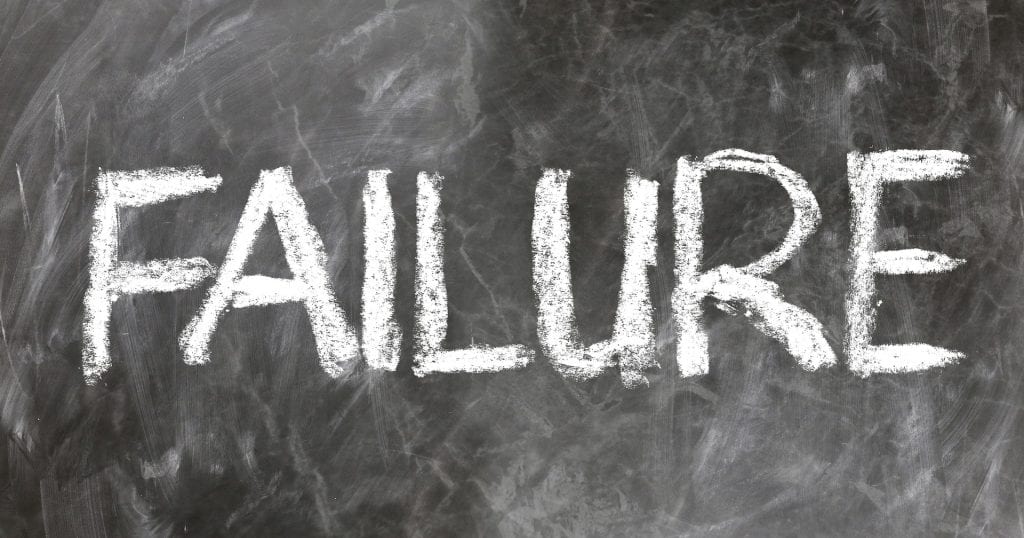
Failure is Optional

“I have not failed.  I’ve just found 10,000 ways that won’t work.”

Thomas Edison certainly knew a thing or two about failure and success.  Amazing to think how different our lives would be if he hadn’t kept going through all the mistakes (and well over a thousand registered patents) before finally bringing electricity to the world.

Fear of failure is common and it is powerful.  It increases vulnerability and self-doubt.  In fact our inner critic would argue that it’s safer to not even try.  This inner voice (usually full of unsubstantiated claims and dramatic conclusions) is simply trying to keep us safe – from disappointment, judgement, loss and all those negative things.  So why try?

We tend to use all sorts of tools such as procrastination, perfectionism, doubt, envy – all to avoid failure.  But what if we saw it as a mere step along the way?  Is it even possible to change our perspective on something that is so personal?

In social psychology there’s a concept known as the ‘fundamental attribution error’.  This is the tendency to over-emphasise personality explanations for behaviour, while under-emphasising environmental effects.  So if I do really well in an exam I will decide it’s because I’m really smart; if I fail, however, I’ll blame the unfair questions.  Failure in this case is not my fault – I can blame someone or something else.

If it’s possible to make a mistake like this in failure attribution, surely it’s also possible to change how we think about it.  A shift in perspective can shine light on the path ahead rather than the trips and falls along the road behind that got us here; ‘eyes on the prize’ I suppose you’d call it.  For artists and creators, in particular, this is simply vital in order to keep going.

“Making art is being willing to fail publicly.” Oliver Jeffers

If we take a leaf out of this book and find persistence to keep going then all sorts of treats lie in store.  We can find the courage to admit defeat on something and call it learning, or we can find the courage to try something new and call it success.  It’s up to us.

Yes, we may fail.  Yes, people may laugh.  But in this case, failure is an option.  Embrace it and don’t take it personally.  It happens to the best of us – just ask Thomas Edison.

Listen to the blog post here!

The Change

I had a birthday this week and am developing a superpower – invisibility. Along with greying hair and daily new wrinkles comes the ability to disappear. But female midlife is also an opportunity to ask questions and finally find out who we are.

The power and beauty of youth will always be revered (although they themselves are not aware, youth is indeed wasted on the young). All those daytime TV sofas with older men seated next to young women; those relationships with older men standing next to young women. The only time this is questioned, or even noticed, is when it is the other way round – goodness, people point out, he’s much younger than her! Sugar daddies are allowed. Toy boys are not.

Societal expectations that define females by sexuality are not going to go away. Not soon at any rate. And the layer of shame and guilt that join midlife changes make for a potent mixture for women of a certain age. This is more than a midlife crisis and its attendant search for meaning. Caring responsibilities tend to fall on females, as do household chores. Then along come sleeplessness, joint pain, mood swings, hot flushes, weight gain and those pesky grey hairs and wrinkles. GPs who don’t understand. No-one talks about it and yet one hundred percent of women will face it at some point. Biologists call it post-reproductive lifespan. We call it menopause.

Only three known mammals experience the menopause – orcas, short-finned pilot whales and us humans. Even our closest ape cousins, chimpanzees, do not go through it. It puzzles evolutionary biologists who wonder why females continue to live so long beyond reproductive capabilities. To paraphrase: what’s the point of old ladies?

A fascinating study of killer whales in the wild found that the grannies (upwards of ninety years old) were in charge of training younger family members to find food. And they had stopped having babies in order to allow their offspring to thrive. Natural selection is still at work here but it is the menopause, rather than reproduction, that keeps their genes strong into the next generations.

As with orcas, so with humans. Women know what they’re about and older women have a part to play in this world. We can grow old gracefully (or fight against it if that’s your preference) but this hard-won life experience should be treasured, not ridiculed. It should be noticed, not ignored.

Listen here for an audio version (not read out by a whale unfortunately)

Turns out, there is beauty in wisdom. And it is there for all to see if we just open our eyes.