Understanding the World

I missed the train recently and it just so happens that a gorgeous indie bookstore is on down the road from the station, so what was I supposed to do? Wait for half an hour on the cold platform?

The problem is that I can’t visit No Alibis in South Belfast without buying something. I’ve tried. And even though I know this to be true, I still pop in with an innocent and deluded belief that, this time, I will leave empty handed. My TBR pile is teetering dangerously next to my bed, I remind myself. I don’t need more books, I think, as I step over the threshold. Ah, but look at them! All laid out with their beautiful covers nestling next to one another like old and new friends. One more wouldn’t hurt, would it?

On this particular day I had been chatting with a friend about the state of the world (it’s awful) and how I don’t understand what’s happening. We parted with drooping shoulders and then I missed the train and got even more annoyed. So as I scanned the bookshelves (convinced I wasn’t going to buy anything) I could hardly believe the title of one of the staff recommendations. ‘When We Cease to Understand the World’ by Benjamin Labatut was shining like a beacon and telling me to pick it up so, with barely a glance at the blurb, I took it to the till. This would fix my philosophical failures, I thought, as I made my way to the station.
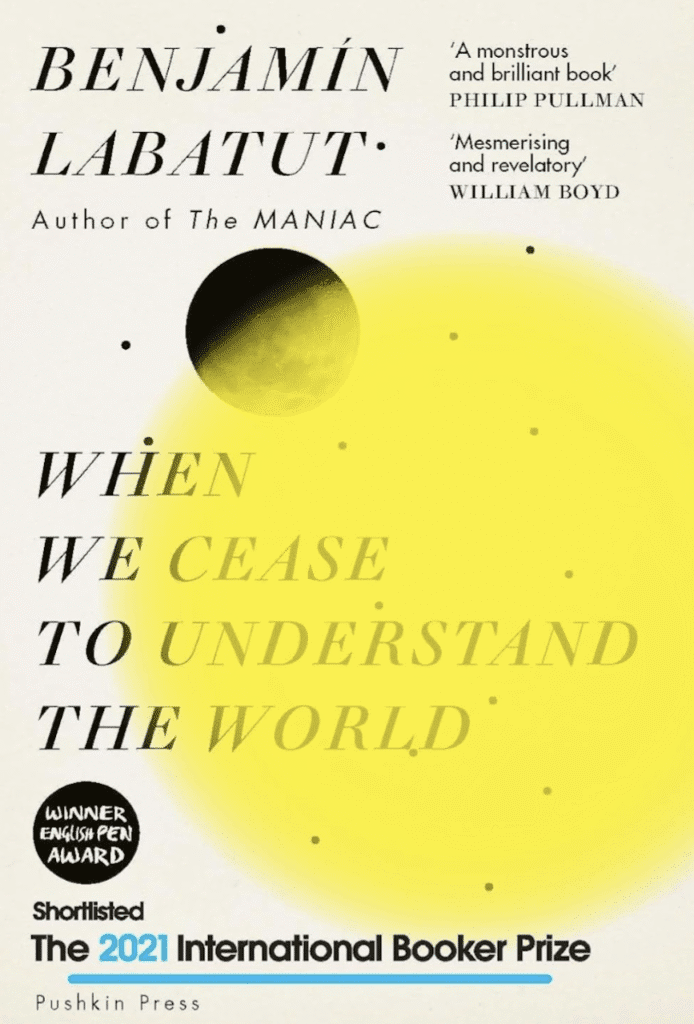
I started to read on the journey home and was immediately transfixed. It’s unlike anything I’ve ever read, sitting between non-fiction and fiction, and I ate it up in two days. It’s dystopian and frightening and weird and engrossing. My quantum mechanics aren’t great (who’s with me?) but there was Schrödinger and Heisenberg alongside Einstein and Oppenheimer as they make discoveries that reach forward into a bright future full of new knowledge and yet all the while they are putting our world (and the humans within it) at terrible risk. Somehow these characters are only half-alive, both real and fictitious. Parts of my mind opened up that had been long-closed (or perhaps had never opened).

In case it’s not obvious, I can’t really describe it, and the Booker Prize judges agree. It’s odd. When I set the book down I took a deep breath and did indeed feel a bit better about the world. Perspective in a crisis really helps and stepping back to look at the universe from afar makes my problems very small indeed.
Infectious

I was staying at a cottage by the sea last month and took a cuppa out into the garden to enjoy the silence. It was going well until a sudden and repeated thumping noise arrived from the kitchen window. I was startled but also annoyed. What was disturbing my precious peace? 

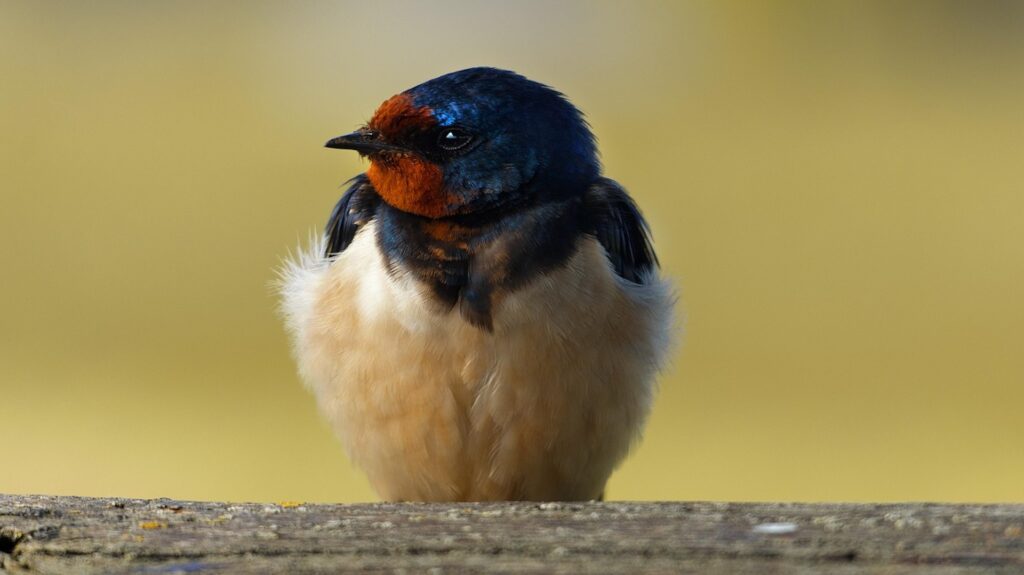
I looked towards the window and saw that a swallow had become trapped inside the cottage and was desperately trying to get out. Her wings were beating furiously against the glass and at once I felt anxious, almost in a panic. I ran inside to try to help and saw that there were two birds flying low against the ceiling and trying again and again to get out the closed window. My heart rate jumped even higher as I opened windows and doors and tried to gently coax them out. Eventually (maybe swallows are smarter than I thought) they both swooped out the small gap in the window and all was well. 

I couldn’t work out why I felt so panicky when they were flying around inside, it was as if I was picking up on their fear. This happens all the time, of course, as we humans interact with one another. There are hidden emotions, things unsaid, thoughts and fears and dreams and hopes fly all around us in ordinary conversations. These invisible and silent things come to land eventually. Some people pick up on others’ feelings more easily, but it’s incredible to think that we can influence another person – for good or ill – simply in how we behave while we’re in their presence. 

When I worked as a reading group leader in prisons there was often a very tense atmosphere in the room – invisible and unspoken issues had made their presence felt and affected everyone. At some point, I came to understand that I needed to project a sense of calm into the room when this happened, purposefully and with intention. It could be something as simple as slowing down my own breathing, but soon enough this peaceful projection found its way and settled on everyone’s shoulders. Sometimes the change was like night and day as we all took breaths and let our shoulders drop. “You’re very calm, miss,” was the response one day. I smiled and let the quiet continue to work its magic. 

We affect one another in so many ways, and so many of these ways are not even visible or easy to contain. We might beat against the window in desperation and wonder why everyone around us is anxious and scared. Or we might take deep breaths and bring a sense of calm to those nearby.

Grounded

I made a difficult decision recently. It took ages, but as soon as I made it the air grew lighter and I could breathe again. Funny how we always say to trust our gut but end up ignoring it until it’s almost too late. Long (long) story short: I quit my job. 

Even writing that sentence gives me the jitters. Working class backgrounds tend to shout at us if we do something so rash. Plus, I feel guilty. Soon enough I’ll be able to move on from a job and an organisation I loved, and soon enough I’ll see that the transfer to a new company wasn’t going to work, no matter how hard I tried. Maybe I’ll see new pastures with new promise. But for now, I’m slowing down and releasing some of the pressure that comes from working in challenging criminal justice settings. Learning to breathe again is the thing.

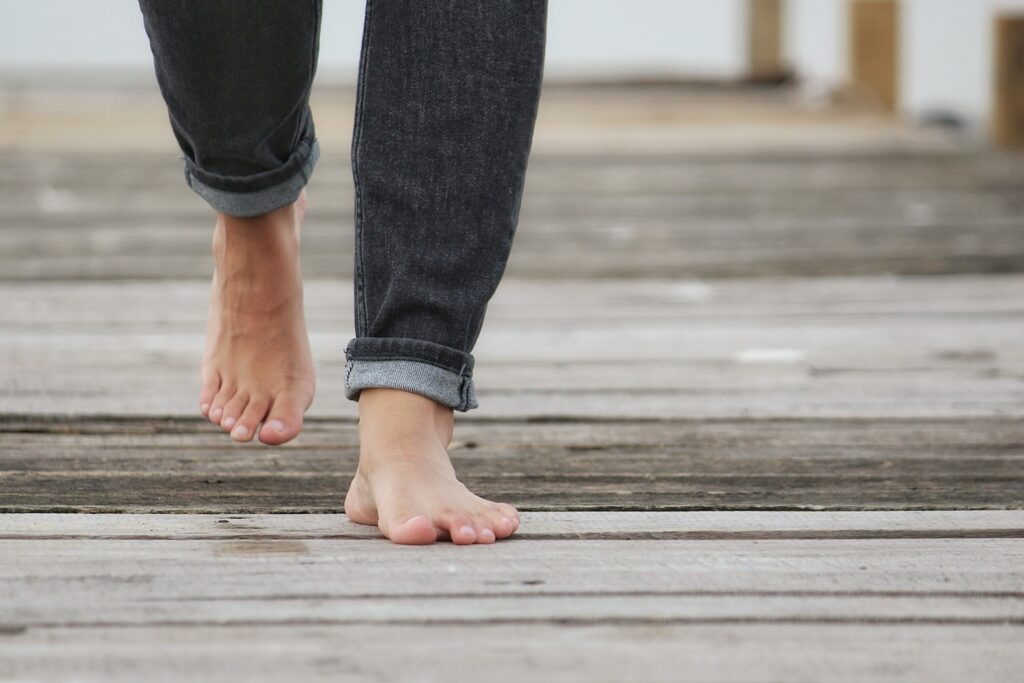
And an odd quirk is helping. Wellness guides suggest various things at times of transition. I’ve tried getting up early (don’t like it), going for a run (sore knees), meditating (too quiet). But then I read about something called ‘grounding’. It’s the simplest thing: stand on the earth, preferably in bare feet, and ground yourself.

I scoffed, of course, and finished my coffee. But the image stuck in my head and I thought about it all day. I could picture my bare toes being tickled by fresh grass, while birds chirped happily in the trees above my head. My garden is small and a bit wild but it’s lovely. Maybe this was worth a try? So recently, with the arrival of spring, I’ve aimed to start each day (not too early, see above) by stepping out the back door and feeling the ground beneath my feet. The first day was a bust – sharp stones on my way to the grassy bit and generally too cold underfoot. This should have been expected. Rookie mistake. So next day I was better prepared: big slippers for the short journey from the door to the garden, and a warm cuppa in my hand. Much better! I slipped off the slippers and gingerly set my bare feet on the grass. It was cold and wet (dew? I hoped) but I took deep breaths and even a few steps. The birds were not singing. The cats were giving me funny looks. But I stuck it out. Soon enough, I ran back inside and found a pair of socks, apologising to my feet. Did this help? Did I feel grounded to Mother Earth?

Well, yes. I’m getting better at leaning into it, I suppose. And like most habits, it’ll take time to grow. I feel like I’m allowed to be here, taking a stand as another day begins to unfold. Health worries and job anxiety melts away, and just for a few minutes, I’m simply a person who stands on grass. 

This simple act has continued to place me on the earth at this point in time. I don’t get out there every day, and sometimes the vibe is all wrong (and let’s not even mention the headless shrew incident). But most days I make it a priority to take barefoot steps outside. The birds sometimes sing and even the cats look on with a sense of, if not approval, certainly something approaching it. Deep changes are taking place as I stand and look into the sky. As a middle-aged woman, I have felt invisible and I’ve spent many years in the background. I didn’t think I was allowed to take up space. But the feeling of standing with skin touching earth, reaching back to my shoe-less ancestors, has taught me that I am here. And it’s enough.

Holding a Grudge

At the last count I hold about twenty seven grudges. Some of them are minor infractions of the ‘how dare they?’ variety, some of them are a lot bigger and some of them, let’s be honest, should no longer be on the list. But I’m happy to say that I’m in very good company.

’Tis the season for scary costumes but be careful if you’re wearing a creepy mask in the presence of a crow. These smart birds will not forgive you. A few years ago a zoologist in America learned that crows can recognise individual human faces, especially those they associate with bad experiences. (Same crow, same). But he also started to realise that the birds shared this new knowledge of dangerous humans with other crows.

John Marzluff and his research team at the University of Washington trapped, banded, and released eight American crows at different sites near Seattle. Before trapping the birds, the researchers donned different rubber masks (a caveman face, for example) and watched the reactions. While the birds were caged, nearby crows circled the site and sounded alarm calls, and when the masks were seen months later, the scolding continued.

Over a year later, John still couldn’t leave his office without being yelled at and pushed around by one particularly annoyed crow, even when he didn’t wear his mask. Families and fledglings and friends of the crow joined in, having decided they did not like this human. The grudge had begun.

Members of the Corvus family are funny and wise and smart. There’s something clever about holding a grudge – it keeps us on our toes, helps us to look out for bad behaviour and therefore stay safe. But it’s detrimental too.  Bitterness, like a poison, seeps. Psychologists suggest that rather than trying to focus only on forgiveness, we can find self-compassion, the very thing that was probably lacking at the time. If we can smooth the way to some kind of peace with what has happened, our minds and bodies will surely benefit. 

So far, so humanly interesting. But the crows in this Seattle experiment were right to scold – the researchers were dangerous. So keep hold of that grudge, clever crows, it’ll stand you in good stead for the future.

A Dirty Word

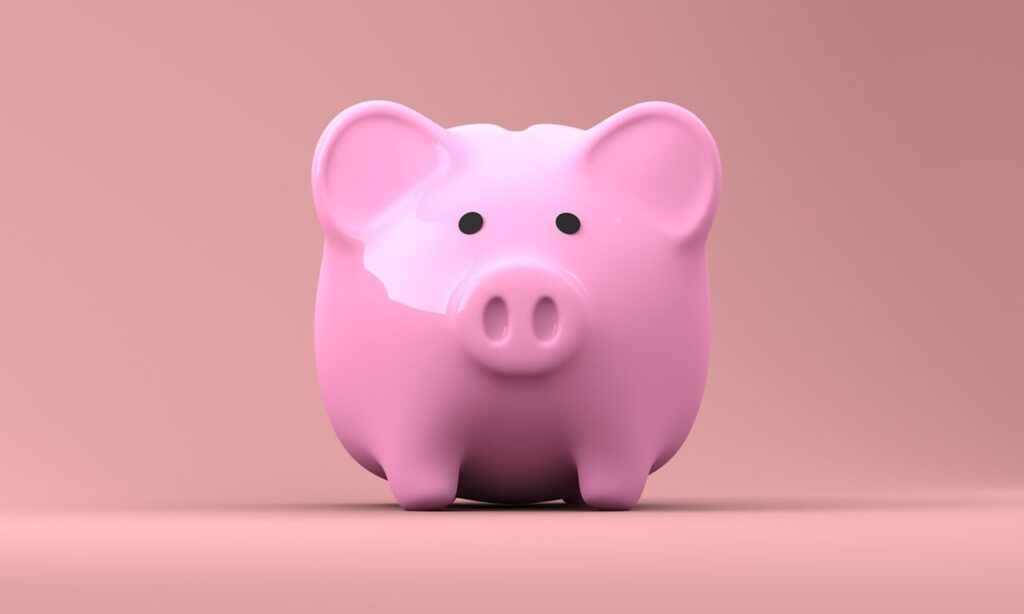
I’ve just hit send on a stressful email. Something has been an issue for years and recently raised its head again to remind me that I really don’t know how to fix it (other than turning back time and making better decisions). The topic is one that we still don’t really talk about, or certainly not with any honesty. It makes the world go round, yet very few of us understand how it works, and in a capitalist society we are under its thrall. Yes, it’s that dirty word: money.

Here’s my story. Once upon a time I received a health insurance payout (following the diagnosis of multiple sclerosis) and wanted to put plans in place for the future. We bought our dream campervan and we started up a small business. Hans the Van eventually carted us off for the Big Trip in 2018 – 361 days visiting 17 countries – a dream indeed, and one I’ll never forget. The Wee Tram was adorable, challenging, fun, stressful, and even though we had to wind the company up after five years, I’m still glad we did it. 

Other than that, I followed professional financial advice and put a large chunk into storage pods, an investment that seemed simple and safe at the time. You’re probably gasping in shock, or at the very least raising your eyebrows at this point, since stories have been hitting the headlines in the last couple of years, often involving people who have lost their savings through investments like this (or even their pension pots, a definite yikes). As the years progressed, it became clear that this was Not A Good Thing, and slowly, very slowly, I started to admit that my money was possibly gone. 

To add recent injury to old insult, my lovely job reading with people in criminal justice settings might be coming to an end soon. This is (unsurprisingly) also about money – funding, tenders, you know the voluntary sector drill. Losing my regular income (and work that I loved) wasn’t in my plan, so perhaps it’s no surprise that today’s email about financial issues is hitting hard. 

Along with the fear and anxiety about the future, though, sits a heavy sense of shame. I’ve always worked hard for a living, always known that money is precious and that not everyone has what they need to survive, never mind thrive. Working class backgrounds instil in us various things, ranging from pride to anxiety to a distinct lack of capacity to dream of something better. But money is also something about which we do not speak: don’t hang your dirty laundry out in public. Hence the arrival of shame. And its bedfellow, guilt. I feel guilty that I wasted a gift, that I didn’t talk about it for a long time, that I’m no longer in contact with the old friend who gave me the advice. Therefore, I’m also feeling sad. 

But the end of the story is still to come. This is a bump in the road and there are paths ahead that could hide all sorts of possibilities. It’s okay to lie down for a while and lick my wounds.