Now You See Me

I was googling myself recently (bear with me, it was for a thing) and realised that I’m nowhere to be found. Well, not exactly nowhere, but you have to do some serious digging before you find me. I’ve been blogging and updating Shedwriting for almost four years, so I suppose I was kind of hoping it would show up somewhere in the blank, inter-web space. Maybe in the New York Times’ list of ‘Great Three-minute Reads’, or ‘Ones to Watch for 2024’ or some such. One of the main problems is that the original voice of ‘Siri’ is also called Susan Bennett. Any search result with my name inevitably brings up this smiling American lady. Who is not me at all. 

This lack of online presence is, of course, self-inflicted. Deep down I’m quite shy and private. I’ve always chosen to eschew Facebook (too adware) and Instagram (too data-miney) so when the time came to step into the online light and launch my website and blog, I chose to dive all in and started a Twitter account too. Since early 2021 I’ve worked hard to curate a lovely, engaged and supportive writerly following, from all over the world, who gently support my small wins and softly commiserate when it all gets too much. The Twitterverse is sadly undergoing a billionaire bash. The little blue bird has gone and in its place is a stark, sharp, black ‘X’. It’s awful. Musk is stomping heavy boots over precious places and I’m annoyed (and powerless). I’m trying to keep my small corner going and some of my followers are sticking it out too. It’s just more time-consuming to trawl through the hateful stuff and lots more work to block weirdos (I’ll not go into detail, but most of them aren’t wearing very much).

Which leads me to the conclusion that staying under the radar is probably wise. The more traction a post or piece gains, the more you lift your head above the parapet – and be warned, there are many people standing armed and ready to take aim and fire. It hurts out there.
So since it doesn’t make sense to send beloved words into the world only to have no-one at all see them, I’ll probably have to learn more about Search Engine Optimisation, and Tags, and other ways to bring an audience to my website. But I definitely plan to keep it small. Small but perfectly formed (like my Shed Email chums – you know who you are).
The Good Old Days

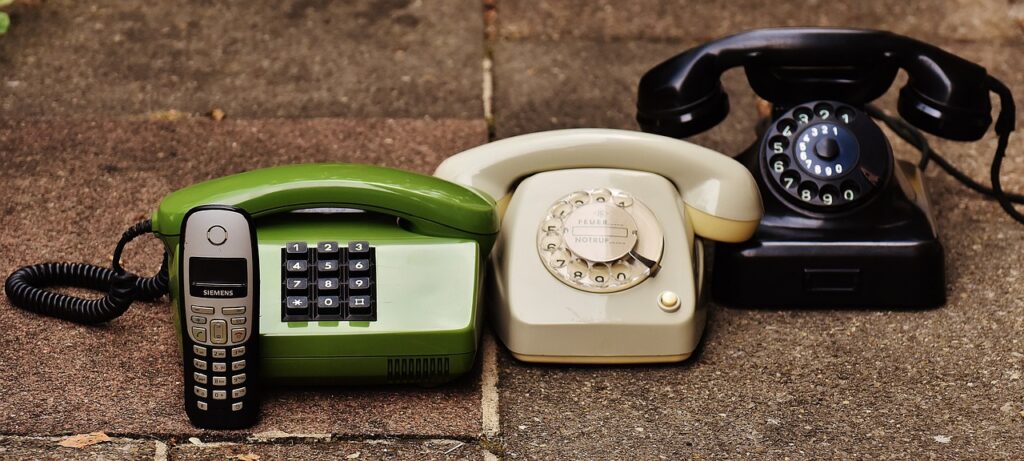
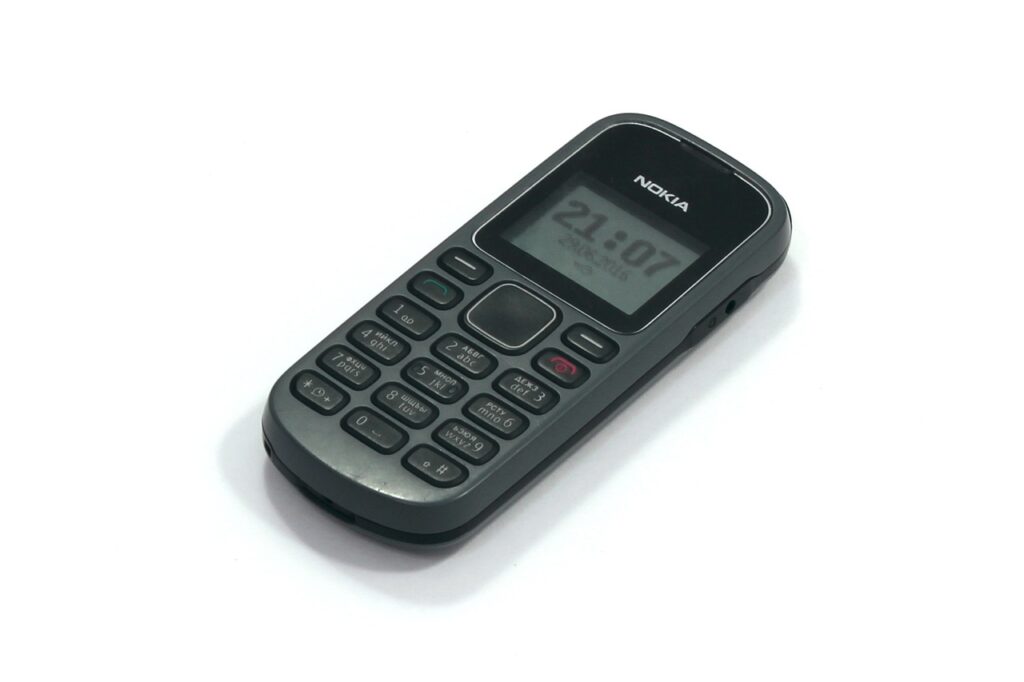
Are you glued to your smart phone with endless doom-scrolling and messages and notification beeps? Do you wish you could switch off once in a while and go back in time – that magical time when phones were, well, just phones?

Turns out Gen Z, as ever, can teach us a thing or two. Apparently they’re leaving smart phones behind and choosing instead a ‘dumb phone’ – you know the ones, little clicky buttons, maybe a cheeky flip screen, too. The idea is to give their heads a break from incessant scrolling, or always being available. Imagine, they say, being able to have a cup of coffee, look out the window, and (shock) NOT TAKE A PHOTO. Goodness. 

It all sounds rather blissful to an old Luddite like me. But it’s a bit complicated. Without the little piece of technology in our hands we really don’t know anything. Where is that new cafe? No idea. Have you heard about the war / election / funny cat video? Nope. What’s your best mate’s phone number? Um, it starts with zero seven, I think? The technological revolution has indeed made the smart phone its epicentre. The world now revolves around these small, handheld devices: communication is via WhatsApp, even car parks use Apps, and without Google Maps we’d all be (quite literally) lost. It’s a bit sad, somehow. And here’s a scary thought – maybe our brains are changing too.

Gen Z are onto something, for sure, but I’m not sure the world will let them get away with it. Or maybe another revolution is on its way? After all, going backwards isn’t always a bad idea. To play my part, I’m turning off notifications, limiting social media (I’m only on Twitter but still, the scrolling and cat videos take their toll) and starting the day with my poetry book (or Calvin and Hobbes, depending on my mood). Everything in moderation as they say. Balance is all.

Warm Heart

I know Spring is arriving and all, what with the daffodils and birdsong and general lightness in the air, but I’m still absolutely freezing. I’m sitting at my desk in full thermal base layers and two pairs of socks, but it’s not really helping. I just can’t get warmth into my bones.

A quick (ill-advised) internet search suggests all sorts of serious reasons for this: old age (thanks); low metabolism; blood sugar issues; anaemia; poor circulation; peripheral artery disease. Gosh. I’d really rather just blame my genes. Granny was always cold and would screech at us kids to “shut the door!” if we were popping in and out of the living room. Mum is the same and is never, ever, without a long-sleeve vest, even in the height of summer. A 1980s heatwave was possibly the last time Mum wore a T-shirt. And she didn’t like it.

The young ‘uns today are wearing shorts in all seasons, and I keep spotting them strutting around outside with not a care in the world. It could be fashion and influencer-based (I know), or they may genuinely not feel the cold. But even a flash of a bare ankle on a cold day makes me shiver and draw my scarf tighter round my neck.

Surely we should be stoic Celts who can withstand all sorts of inclement weather and strong winds? There are colder places to live. But my friend, Swedish Sara, has always said that it feels colder here in Ireland than at her home, where temperatures can reach minus 13. The damp air and general greyness seems to seep into our bodies. The Scandis have somehow mastered this. My forays into Swedish saunas during our year out in the van were a revelation: hot, hot, hot room; deep, deep, deep breaths; and finally, warm bones. Stepping out from those pine huts into a cold outdoors, with bare feet and arms and legs, I felt at one with the world. Who’d have thought that I could feel the breeze on my skin and simply smile and close my eyes? No shivering here. A cool outdoor shower woke me up in places I’d never even known I was asleep.

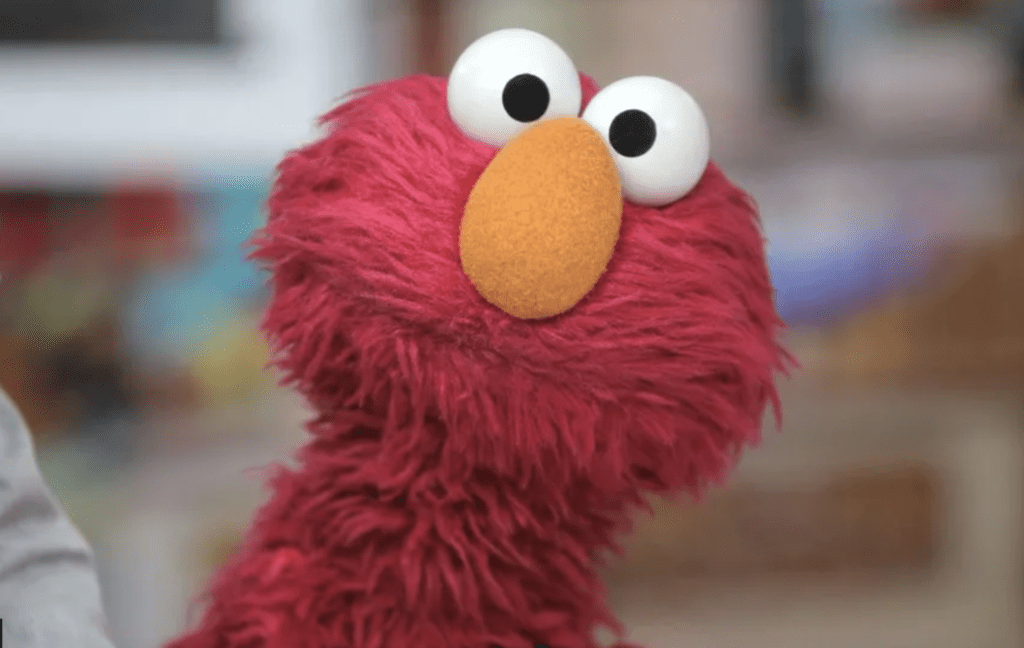
Muppets Rule OK

Photo: BBC News

Something weird happened at the end of January. A muppet asked everyone a question on Twitter (that’s weird enough, you’ll agree) and received a barrage of pain in response. 

It was a dark Monday (of course) so it’s maybe no surprise that the innocent question – how is everybody doing? – resulted in over 13,000 replies and almost 150 million views. So how are we all doing? Turns out, not well. Some people talked about losing their jobs, ongoing anxiety about world affairs and even existential despair. 

Elmo, with his red fluff and sweet smile, is probably the kindest muppet out there, so I do worry that this unloading of despair onto his little shoulders must surely have given him his first frown lines. 

Soon enough, of course, the memes arrived and Elmo appeared to be staring into a fiery abyss or widening his eyes at the scale of despair he’d unleashed. Even Cookie Monster got involved and offered to help – ‘me here to talk it out whenever you want, me will also supply cookies.’

It was funny and weird and interesting, but it was also profound. We’re all coping with stuff, all the time, and the world is on fire right now. We need to share the burden with each other, to ask for help and to admit that some days it’s all too much. 

Rest and Play

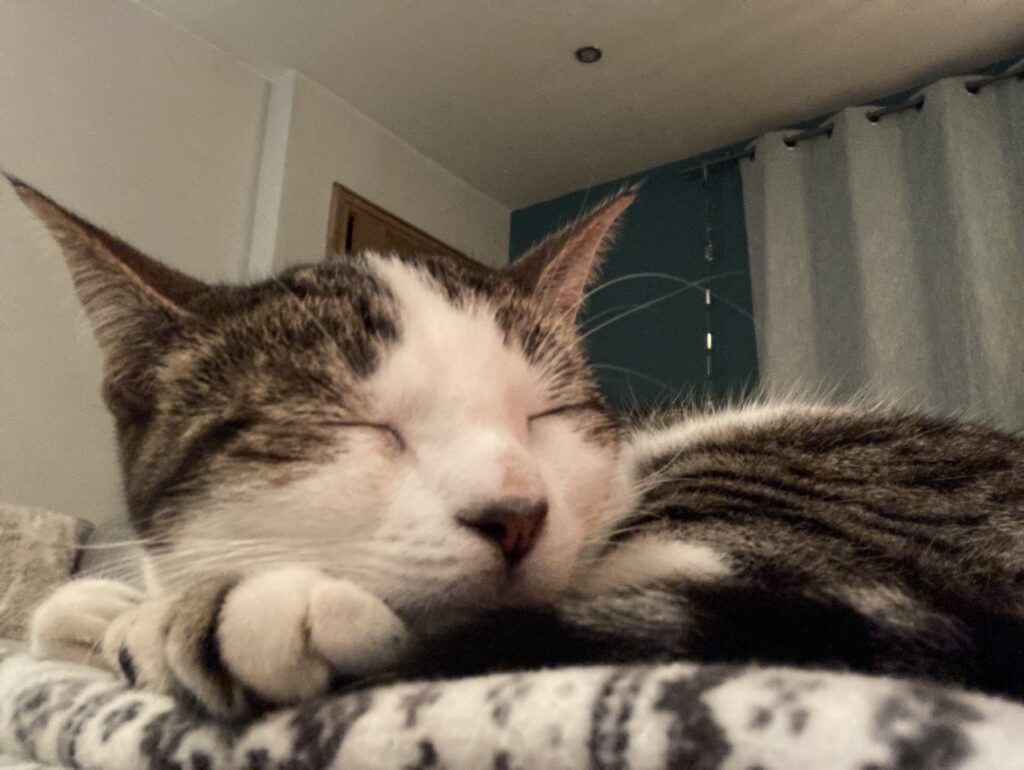
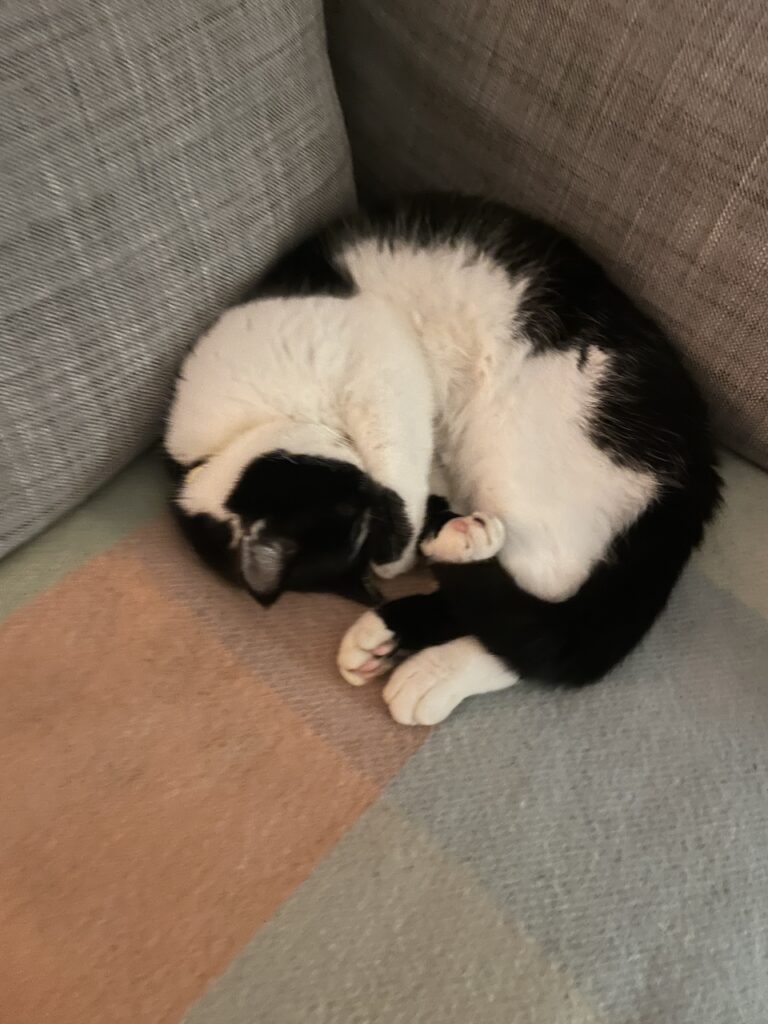
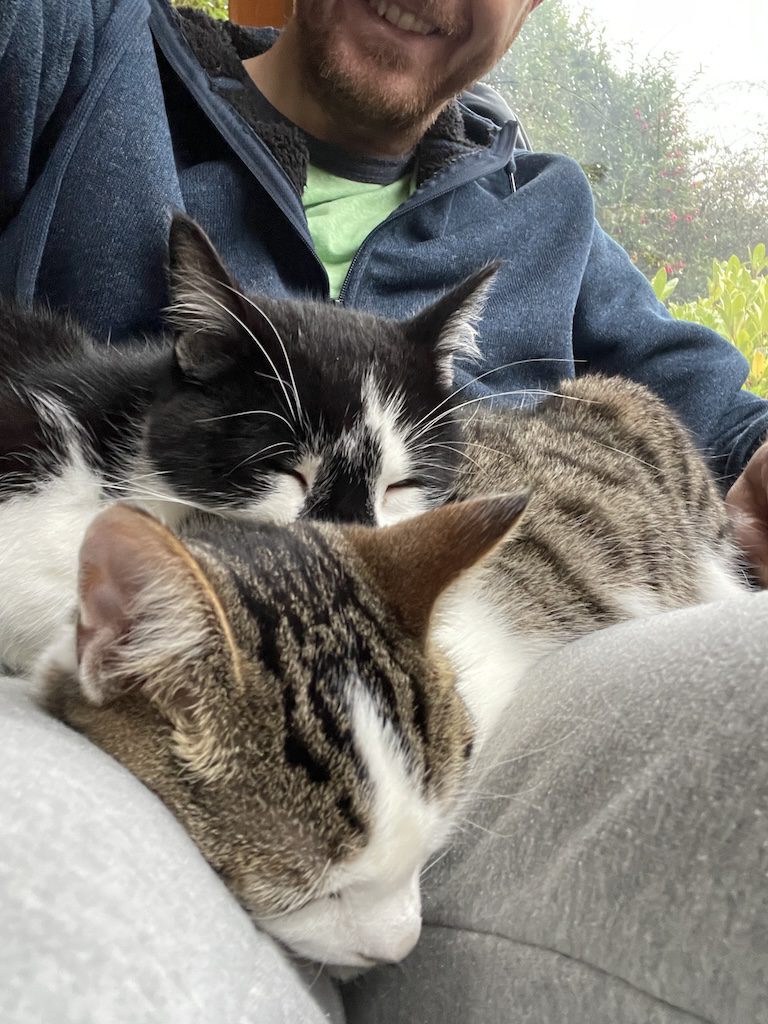
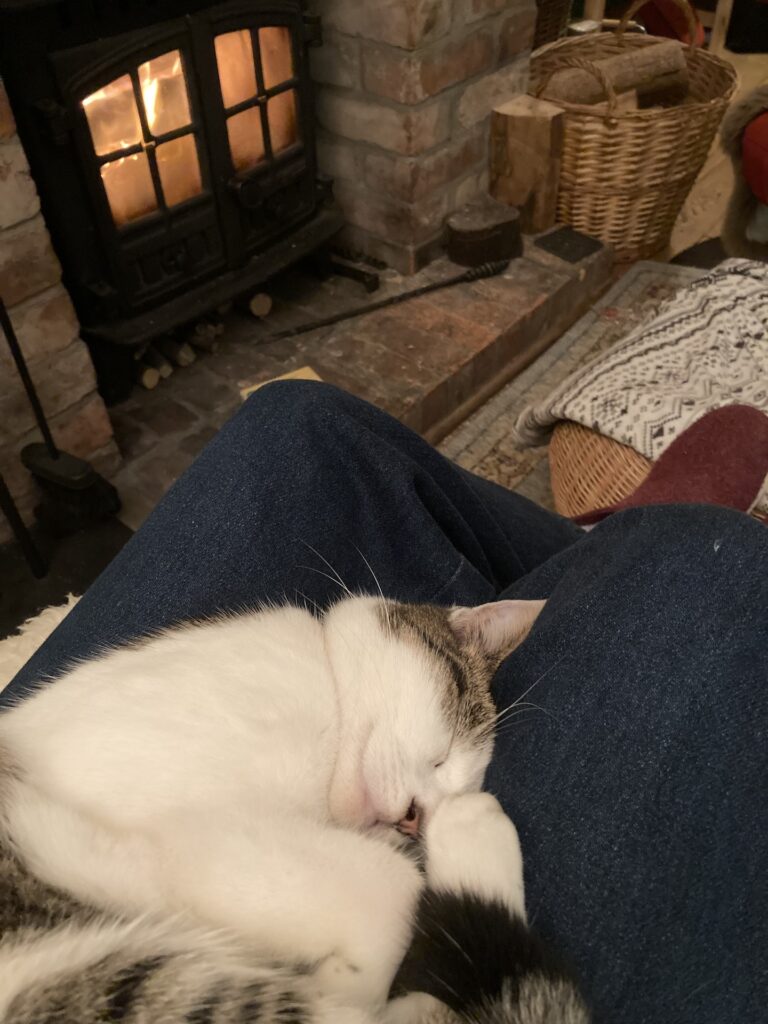
I’m getting really good at resting. I can make a whole morning disappear in the blink of an eye and all I’ve done is eat breakfast, look at the sky, read a chapter of a book and snuggle a cat. Before I know it, lunch time arrives and then I can maybe go for a walk, read another chapter, have more cat snuggles. You get the drift. But why did it take so long to learn this particular skill? And how come I still need to shake off a dusting of guilt now and then when I finally stop working or doing ‘useful’ things, and just sit?

It could be a mix of Protestant work ethic, patriarchal expectations and my own sense of self. I need to do something to feel reward; I need to be useful before I deserve a rest. And there’s the rub – resting feels different when it’s a choice, when it follows a fulfilling time, whether that be work, social engagements or anything in between. To stop and say ‘ah, that was good, that went well, I think I’ll have a cup of tea and a chocolate biscuit now’. Those are the precious times of rest when our minds, as well as our bodies, get the recharge they need. We come out ready to move once again.

But if times of stopping are pushed on us – through redundancy, or unemployment, or ill-health – it feels very different. The lingering lie-in is depressing (because it happens every day), the collapse onto the sofa is sad.  It’s as if guilt and low self-worth rob our rest of its potential for fulfilment. 

Psychologists have a term for this: resting guilt. When we stop to take a break, sit down, put the kettle on, whatever that looks like for each person, the accompanying guilt takes a seat beside us and shakes its judgmental head. We rush the tea, can’t concentrate on the book, don’t notice the clouds in the sky. And soon ‘get back to it’ without feeling refreshed at all. 

So now that I’ve mostly learned how to enjoy a day (or even an hour) off, I only need to watch the cats for a quick reminder lesson in how it’s done. Talk about relishing the joy of a lie-in, the happiness of a wintery afternoon wrapped in a blanket, the swaggering ease of a mooch around the garden. 

It’s never a waste to stop and make a cuppa. And your body, not to mention the people around you, will thank you. I’m reframing any ‘wasted time’ as ‘resting time’. Take this as your permission slip to do the same.